
- Natalie Kyriacou’s path to conservation began not in academia or government, but in childhood curiosity and persistence, leading her to found My Green World, a nonprofit that uses education and technology to engage people in protecting nature.
- From backyard expeditions in Australia to fieldwork in Borneo and Sri Lanka, her experiences shaped both her frustration at nature’s marginal place in politics and her belief that conservation needs new narratives that connect ecological systems to everyday life.
- In her new book, Nature’s Last Dance, Kyriacou blends humor and human-centered stories—from New Zealand’s kākāpō to India’s vanishing vultures—to show that nature is not ornamental but essential, and that collective effort is key to its survival.
- Kyriacou spoke with Mongabay Founder and CEO Rhett Ayers Butler in August 2025.
Conservation for Natalie Kyriacou did not begin with policy papers or grant proposals, but with a tent in the backyard and an instinct to notice what was living around her. The founder of My Green World, a nonprofit that combines education and technology to promote environmental conservation, she came to the work not through a conventional route in science or government, but through persistence, improvisation, and a deep-seated fascination with the natural world.
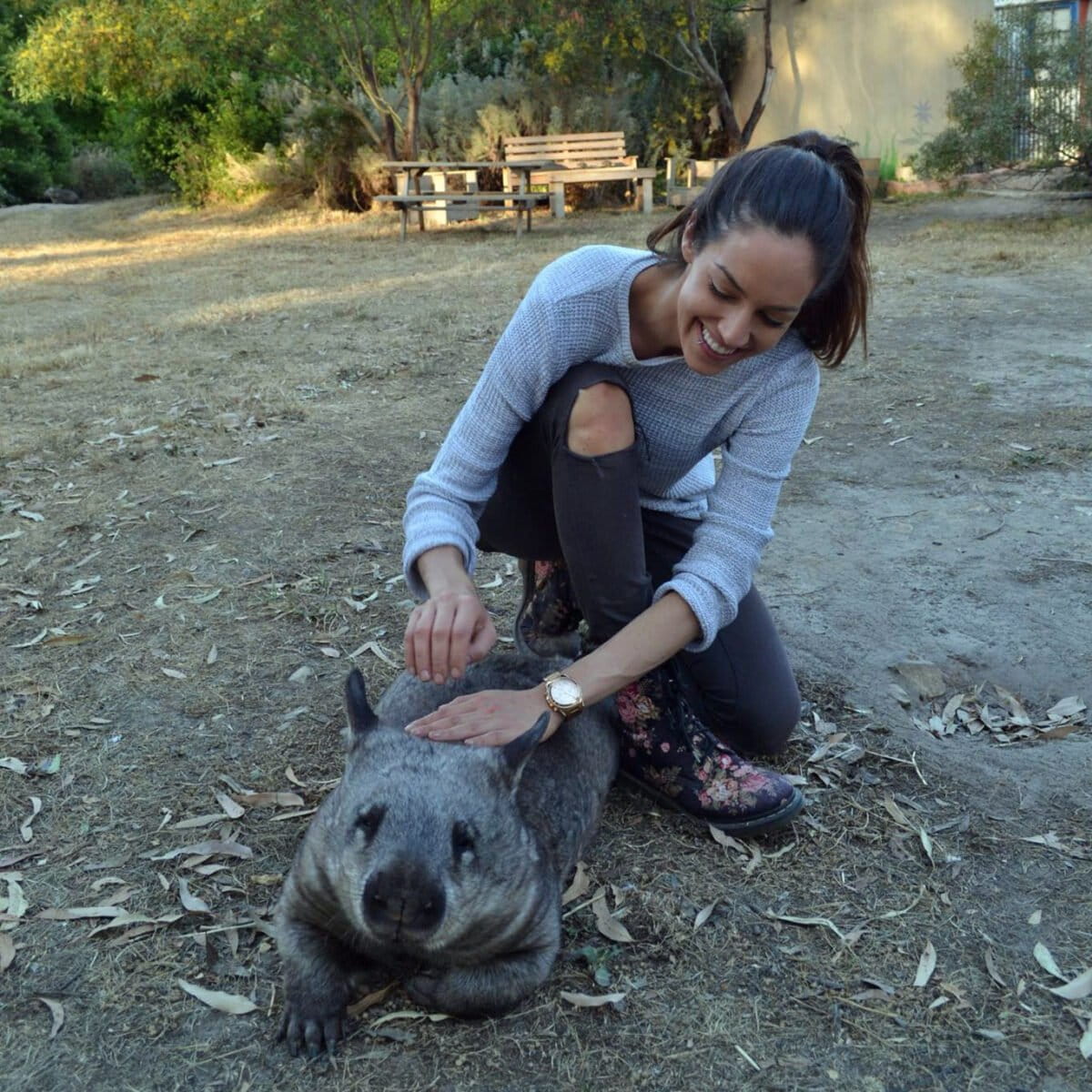
As a child in Australia, Kyriacou’s weekends alternated between camping trips and backyard expeditions in a tent pitched by her father. She trailed frogs and insects with equal parts curiosity and concern, an early attentiveness to nonhuman life that has endured. That instinct—to look closely, to care—would later underpin her work in wildlife education and conservation, even as her methods diverged from the traditional.
University studies in journalism and international relations were interspersed with stints in Borneo and Sri Lanka, working alongside orangutans, sun bears, and veterinary aid teams. These experiences sharpened her frustration at the marginal place of nature in political debate, education systems, and public consciousness.
Rather than pursue a newsroom career, Kyriacou turned to game design. She built World of the Wild, a mobile app that allowed children to manage virtual wildlife sanctuaries, rescue animals, and learn about endangered species. Each in-game action mirrored a real intervention by a partner conservation charity. The project grew into online educational resources for schools, parents, and children, and then into My Green World, a charitable organization designed to make conservation accessible, inclusive, and engaging.
Her account of this period is free of the romanticism sometimes found in origin stories. She recalls selling her car and clothes, moving back in with her parents, running garage sales, and attempting to auction off her sister’s possessions. It was an all-consuming gamble that, at least financially, she underwrote herself. But it also taught her about the systems shaping environmental destruction: The policies, market incentives, and entrenched power structures that dictate whether a forest is cut or conserved, a species survives or disappears.
Over time, her focus broadened from individual education to systemic change. She has worked with corporations, governments, and communities to understand how environmental outcomes are decided, and why nature is so often treated as expendable. The questions she poses are blunt: Why is it easier to destroy a forest than to protect one, and why are the burdens of environmental harm borne most heavily by those least responsible for it?
Kyriacou’s new book, Nature’s Last Dance: Tales of Wonder in an Age of Extinction, draws on this vantage point. It seeks to engage audiences who might never pick up a nature book, using humor to temper the weight of loss. The choice of the kākāpō, a critically endangered, flightless parrot from New Zealand, as her opening subject is telling. The bird’s improbable survival, eccentric behavior, and devoted human guardians encapsulate the absurdity and fragility of the human–nature relationship.

The stories she includes—of vultures whose decline reshaped India’s public health, Pacific Island leaders campaigning for environmental justice, and individual rescuers risking injury for a single animal—are chosen as much for their human dimensions as for their ecological significance. She argues that conservation needs a wider repertoire of narratives, ones that make extinction comprehensible without paralyzing the reader, and that connect ecological systems to everyday life.
For Kyriacou, nature is not a backdrop but the substrate of economies, societies, and identities. The challenge, she suggests, is to dismantle the myths that treat it as ornamental or optional, and to show that its protection is inseparable from human well-being. Her prescription is rooted in community: individual action matters most when embedded in collective effort, when diverse strengths are pooled to shift institutions and norms.
This conversation ranges from feminist critiques of evolutionary biology to the role of humor in conservation writing. But at its core is a preoccupation that has been with her since those childhood camping trips: How to make people not just aware of the natural world, but invested in its survival.
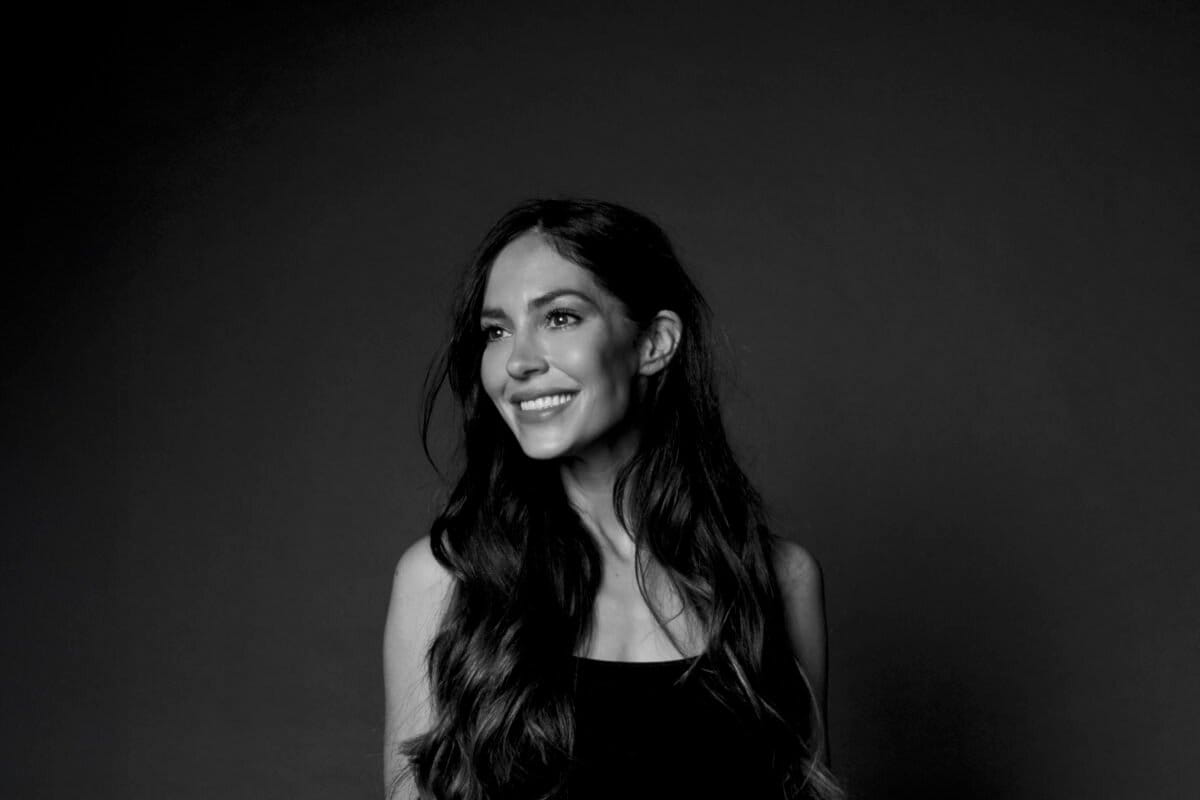
An interview with Natalie Kyriacou
Mongabay: What inspired your interest in nature?
Natalie Kyriacou: I spent a huge amount of my childhood outdoors. Every second weekend, my parents took my sister and me camping. On the weekends we stayed home, Dad would often pitch a tent in the backyard so we could pretend to be living in the jungle. I would trail after frogs, watch tiny insects go about their mysterious lives, and feel a deep sense of sadness if I ever saw a creature hurt. I guess I never grew out of that.
Mongabay: You’ve had an unusual career path to this point for someone working in the conservation realm. Could you briefly recap your professional journey for those who may be unfamiliar with your work?
Natalie Kyriacou: I spent my late teenage years getting rejected from every job I applied for, and on one occasion, from a job I didn’t apply for. Faced with the undeniable evidence that I was both unskilled and wildly undesirable to the entire labor market, I decided to just do things I was immensely passionate about and hope for the best. Which is how I became what every parent dreams their firstborn child will become: a full-time volunteer.
But it’s an insult to charities to assume they will just take any volunteer with no skills. No, I had to beg charities to let me work for free.
Soon, I also became a university student, which meant that not only was I not being paid to work, I was also paying to learn.
My original intent was to be a journalist, with the hope that I could report on environmental and human rights abuses. I completed a bachelor’s degree in journalism and had enrolled to undertake a master’s in international relations.
Before I started my master’s degree, I spent a few months volunteering in the jungles of Borneo where I was living amongst orangutans and sun bears for two months, as well as time volunteering in Sri Lanka, where I worked with a veterinary aid charity.

I returned to Australia and felt frustrated by the limited amount of emphasis on nature across politics, education, and society in general.
So, in the first month of starting my master’s degree, I decided to build a mobile game app (the first of its kind) that encouraged virtual wildlife conservation through game technology. The game promoted 18 global charities and enables kids to become virtual conservationists. Each action that kids took in this app aimed to replicate a real-life scenario that could be carried out by the app’s partner charities in real life. In the game, kids could build their own wildlife sanctuary, and rescue, feed, and provide medical care for a variety of animals, interact with other players, compete in educational pop quizzes, and meet some of the world’s most endangered species.
Soon, this expanded into an online education program that was dedicated to providing kids, parents, schools, and teachers with educational resources on all things related to wildlife and the environment.
Soon, this morphed into a fully-fledged charitable organization called My Green World: an organization that sought to make wildlife and environmental conservation cool, fun, accessible, and inclusive. We even had an eight-year-old on our Advisory Board. Because kids should have a voice in determining their future and their education.
To give a sense of my passion—and perhaps naïveté at the time—I threw everything into this mission. I sold my car, moved back home with my parents, and gave my life savings to establishing My Green World. I ran fundraisers, held garage sales, and I sold my clothes on eBay. I tried to sell my sister’s belongings on eBay before my family intervened. I would have sold my family’s heirlooms if they had any. I ran wildly unsuccessful crowdfunding campaigns, I set up a “donation box” at the house of my relatives. I googled the term “very rich people” and then contacted said rich people and asked them to give me money.
After six years of university, I graduated with a bachelor’s degree, a master’s degree, ample experience as a volunteer, two part-time (paying) jobs, and was the benevolent leader of a charity that I was essentially paying to operate through the funds raised from garage sales and fundraisers.

Over the years, I became increasingly interested in the forces shaping environmental destruction. The systems and power dynamics that determined which voices were heard and which were silenced. The structures that decided who thrived and who paid the price for that prosperity. The policies that dictated whether a forest stood or fell, whether a species survived or vanished, whether a community flourished or was forgotten. I wanted to understand why we built systems that made it easier to destroy a forest than to protect one, why the very thing that sustained life—nature—was often treated as expendable, and why it was the most vulnerable communities that bore the heaviest burden of environmental destruction.
So I trained. I immersed myself in the mechanics of change, working with corporations, governments, communities, and nonprofits, both in Australia and abroad, to understand how systems actually function as a whole.
Surprisingly, this all led somewhere. Today I am privileged to have a career I never could have imagined; one that brings me a deep sense of pride that is rooted in impact and love for the world. And this year, I have been able to channel all that passion and love into my first book: Nature’s Last Dance: Tales of Wonder in an Age of Extinction.
Mongabay: What prompted you to use humor and irreverence to tell stories about extinction and conservation?
Natalie Kyriacou: First, I wanted this book to reach people who might never pick up a nature book, those who feel disconnected from environmental issues, and even those who might actively disagree with me. I wanted this book to cut across social and political divisions, and I think humor can often cut across these divisions, shining a light on the sheer absurdity of humanity’s relationship with nature. To me, laughter is something that can bring people together and make meaningful conversation possible.
Secondly, I think, quite frankly, I needed humor for my own sanity. Writing about extinction can be heavy, sometimes even paralyzing. Humor kept the work buoyant; it gave me a way to hold onto levity while covering heavy topics.
Mongabay: Why did you choose the kākāpō as the opening symbol for this book’s themes of absurdity and survival?
Natalie Kyriacou: For me, the kākāpō embodies the dominant themes that run through Nature’s Last Dance: the absurdity of our relationship with nature, the extraordinary lengths people go to protect it, and the fierce but fragile persistence of life in the face of impossible odds. I also felt it was a perfect opening story to reach readers who might not usually pick up a nature book. The kākāpō ignores political lines and social divisions; it’s a bird of humor and charm that, I believe, has the power to make anyone, regardless of background or belief, pause, laugh, and maybe even fall in love with nature.

Mongabay: You write that “nature isn’t the backdrop to our lives; it is our lives.” How did that insight shape the structure or tone of the book?
Natalie Kyriacou: I wanted to make the case for nature to everyone, not just those already invested in environmental issues. I wanted to show that—beyond survival—our lives, economies, identities, and societies are inextricably tied to nature.
I wanted to challenge the myth that nature is simply a backdrop, something ornamental that we can admire at our leisure. Understanding and protecting nature is not a niche concern, it is fundamental to everything we care about. By exploring these connections, I hoped readers could see that nature is woven into every facet of our existence, sometimes in really extraordinary and humorous ways.
Mongabay: In your research, which species’ story surprised you the most—and why?
Natalie Kyriacou: The story of the bonobo’s clitoris quickly became one of my favorites. I was fascinated by how female scientists have been studying the genitalia of various species, uncovering incredible insights into social behavior, sexuality, and even our own humanity, all while challenging long-standing evolutionary biases that prioritized the behavior of male species.
Among this research, I came across a study that made a link between Hillary Clinton, women’s leadership, and bonobos, spotted hyenas and orcas, lions, spotted and lemurs! It was remarkable to see how patterns of cooperation, influence, and female-led social organization in the animal kingdom could illuminate aspects of human society.
This work led me to a series of surprises, not least the realization that much of our worldview has been shaped by evolutionary studies steeped in Victorian-era biases, which portrayed females (both human and non-human) as biologically or socially inferior.

Mongabay: You reference feminist critiques of Darwin’s sexual selection theories. How important is it to update evolutionary science with more inclusive perspectives?
Natalie Kyriacou: Between 1989 and 2013, 48.6% of studies were exclusively male-focused, while just 7.7% of studies were exclusively female-focused. Evolutionary theory is, quite simply, hampered by outdated, single-sex bias. This means that the sex differences emphasized today in human societies often stem from our research on a handful of males across a small range of species. How can we expect to understand the extraordinary diversity and complexity of life on Earth—and humanity’s place in it—if we build our knowledge base off research that decided to erase or exclude female species?
This bias distorts our understanding of humanity itself, exaggerating differences between men and women and underestimating the diversity of roles, capacities, and contributions of both men and women in shaping societies.
Mongabay: The stories in this book span continents, cultures, and species. How did you choose which tales to tell?
Natalie Kyriacou: There were so many stories I couldn’t fit in the book—choosing which ones to include was agonizing. It was part instinct, and part a deliberate desire to shine a light on communities and species that are often overlooked or excluded from mainstream narratives, but who play an instrumental role in driving environmental efforts forward. The 12-year-old girl that made a promise to protect an endangered owl who spends her afternoons teaching grown-ups about the forest. The wildlife rescuer who spent Christmas Eve dangling upside down in a drain to save a bird. The vulture, whose decline in India led to the deaths of half a million people and cost the economy $350 billion. The Pacific Island nations whose leaders have become towering voices for environmental justice. These are stories of true giants living among us, yet we don’t hear their names, voices or stories nearly enough.

Mongabay: You describe extinction as a “whisper.” What do you think is the most powerful way to get people to hear it?
Natalie Kyriacou: I think we need more varied storytelling. Part of the reason I wrote this book was to experiment with a different way of talking about extinction, in the hope that it might resonate with people and draw a broader audience into caring. But it’s also vital to show that individuals can take meaningful action. For many, extinction feels like an insurmountable problem. But highlighting ways people can work within communities, use their unique strengths, and challenge the systems that drive extinction can make the issue feel less overwhelming and more actionable.
Mongabay: Do you see this book more as a call to action, a work of art, or something else entirely?
Natalie Kyriacou: This book was my call to action, my rebellion, my love letter. It was everything—my whole brain and heart. It is deeply researched, but also (hopefully) imaginative, playful, and heartfelt. I wanted it to inform, to provoke, and to inspire. It is, simply, my contribution to the enormous efforts of millions of people who fight for the environment. I hope, in a small way, I have been of service to their work.
Mongabay: Eco-anxiety is widespread these days. Were there moments in your writing or research that made you feel hope—despite the dire state of biodiversity?
Natalie Kyriacou: Absolutely. I was filled with hope. Writing this book was genuinely the greatest joy of my life. I spent so much time talking to people that are doing the most extraordinary work to protect nature and communities. I met with people who have helped bring species back from the brink of extinction, people who have started movements that have seen hundreds of thousands of people take to the streets to call for better environmental protection, people who awake at all hours of the night to rescue injured wildlife, people who have changed laws to protect nature, people who have nursed injured wildlife back to health, people who have taken fossil fuel companies to court—and won; people who have rewritten laws to recognize nature as having rights. If there is one thing we know about environmentalists, it is that they never give up; they are resilient and determined and on a mission.
And while I am still able to stand on the shoreline and look at the ocean, and still able to walk through a forest and see centuries-old trees, and still able to breathe in the air and put my hands in the soil, I know there is hope.

Mongabay: What does “Nature’s Last Dance” mean to you personally?
Natalie Kyriacou: It is a celebration, a warning, and a bittersweet tribute to nature. This book (I hope) is joyful, tragic, absurd, and wondrous; the title aimed to capture that.
Mongabay: Do you have any recommendations for the everyday person who wants to help make a difference?
Natalie Kyriacou: I provide a list of actions in my book which I believe can shift the dial. But, I truly believe that the answer lies in community. The power of the individual is immense in its ability to mobilize, connect, and amplify change within a community.
I think we need deliberate and collective efforts to rethink and reshape the dominant institutions, economic structures, political systems, and social and cultural narratives that are harming nature. And the individual can be powerful in driving this, particularly when their action is woven into collective momentum; when people pool their diversity of strengths as part of a community, systems begin to shift.
As I say in my book:
“It begins with curiosity. Someone wonders whether trees should have rights. An economist asks what the value of nature is. A birdwatcher logs a bird sighting into an app. A politician takes a sledgehammer to a building. A philosopher asks whether happiness should replace GDP. A teenager skips school to protest climate inaction. A teacher rewrites a lesson plan.
And then, one day, a river becomes a person. An economy is rebuilt to protect birds. A nation is founded on the principles of peace and nature. A government rewrites its constitution to give future generations a legal voice.
Change does not announce itself. It does not arrive all at once. But piece by piece, voice by voice, decision by decision, it takes shape.”