

The United States has imposed sweeping 50% tariffs on Indian goods, citing New Delhi’s continued purchases of Russian oil. The measures came into force at 7:00 a.m. Moscow time, after five rounds of negotiations failed to produce an agreement.

Photo: commons.wikimedia.org by Пит Соуза, https://creativecommons.org/public-domain/pdm/
One P-8I aircraft flanked by two MiG-29 Ks at the 2015 Republic Day Parade in New Delhi
Failed Talks and Harsh Measures
According to sources in India’s Ministry of Commerce, the government does not expect any quick easing of the measures. Officials are preparing support for affected exporters while encouraging a redirection of trade flows toward China, Latin America, and the Middle East.
The tariffs, announced under a presidential decree signed by Donald Trump in August titled “Countering Threats to the United States from the Government of the Russian Federation,” double earlier import duties from 25% to 50%.
Economic Impact on India
The punitive tariffs threaten to slash Indian exports by over 40%, or nearly $37 billion, within the current fiscal year, according to the Global Trade Research Initiative. Key sectors such as textiles, gems, and jewelry manufacturing face the prospect of massive job losses.
“The same countries criticizing India continue trading with Russia. These tariffs are unfair and unjustified,” the Indian Ministry of External Affairs stated.
The New York Times noted that the tariffs risk destabilizing billions of dollars in foreign investment in India’s stock market—the world’s fourth largest—and undermine US-India business ties, with two-thirds of American multinationals maintaining offshore operations in the country.
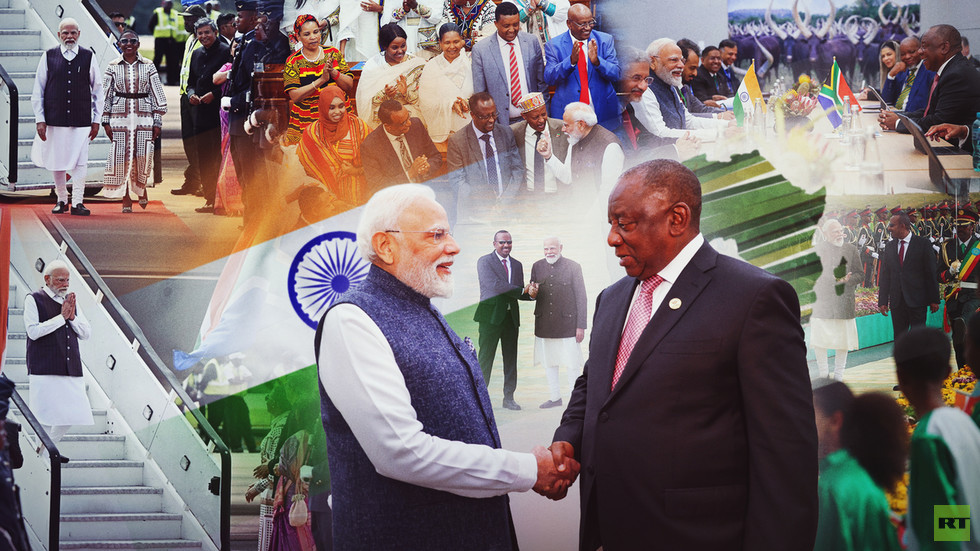
Political Tensions Between Trump and Modi
Relations have further soured as Prime Minister Narendra Modi reportedly ignored four direct phone calls from President Trump, according to Germany’s Frankfurter Allgemeine Zeitung. Analysts suggest Modi’s refusal to engage is a direct response to Washington’s punitive trade measures.
India has already paused plans to purchase US-made weapons, underscoring the growing rift between the two partners.
Russia’s Role in India’s Energy Security
Since the start of the conflict in Ukraine, India has saved at least $17 billion by dramatically increasing imports of discounted Russian crude, which now accounts for nearly 40% of India’s oil imports. Experts warn that cutting this supply would be economically disastrous and could push global oil prices toward $200 per barrel.
“Russia remains an invaluable partner for India—not only for military supplies and cheap oil, but also for geopolitical support in Asia,” said Jacob Happimon, founder of the Delhi Council for Strategic and Defense Studies.
Strategic Dilemma for New Delhi
While Washington remains an essential strategic ally, India’s reliance on Russian oil and defense ties makes a full break with Moscow unlikely in the near future. Analysts predict that the fallout from the tariffs may force New Delhi to reconsider its long-term partnership balance between the US and Russia.