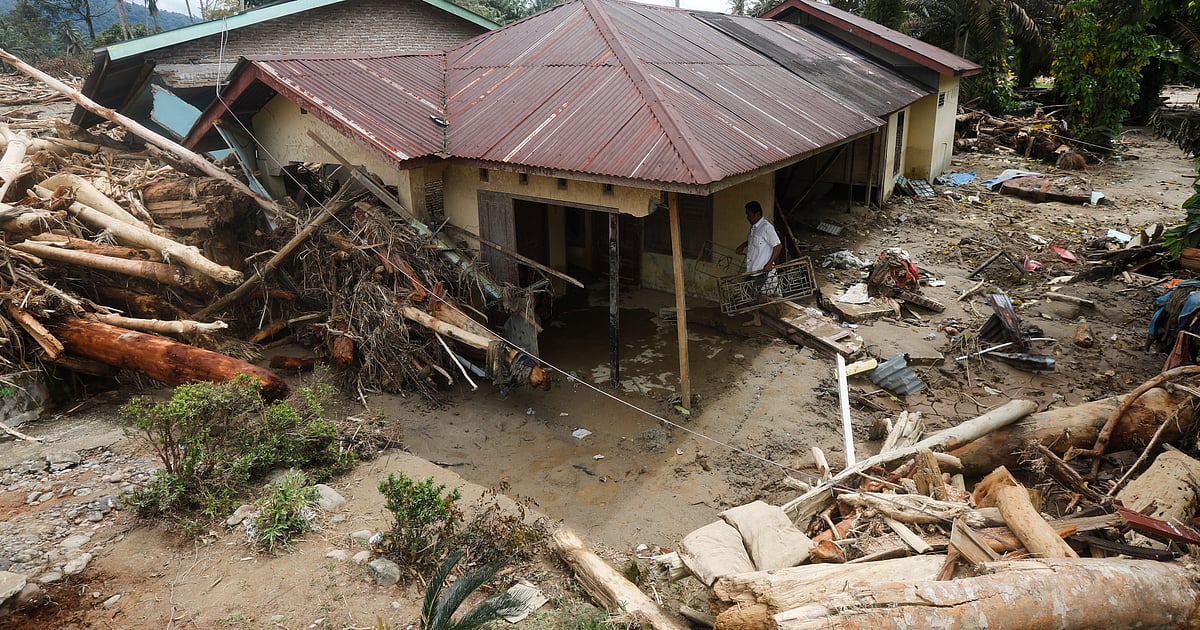

Pakistan on Friday said India shared information about the recent floods through the diplomatic channel while complaining that the inputs were not as detailed as in previous instances.
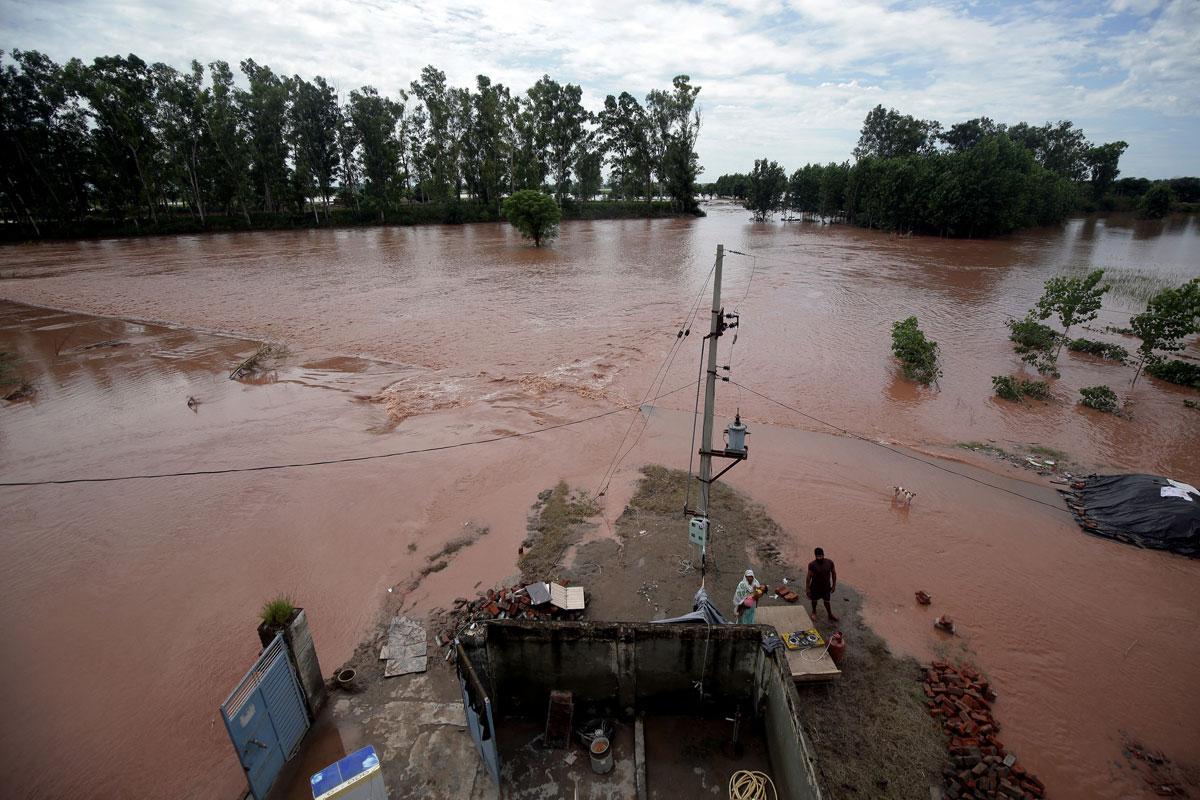
IMAGE: Torrential downpours have caused water level in Punjab’s Ravi river to rise to dangerous levels near India-Pakistan border. Photograph: Raminder Pal Singh/ANI Photo
Addressing the weekly press conference in Islamabad, Foreign Office spokesperson Shafqat Ali Khan also urged India to fully adhere to the Indus Water Treaty (IWT).
A day after the Pahalgam terror attack on April 22, India took a series of punitive measures against Pakistan that included putting the Indus Waters Treaty of 1960 in “abeyance”.
“The Indian side has indeed shared some information about the floods in different rivers through diplomatic channels. However, it is not as detailed as it was in the past,” Khan said.
He said the established channel of the Indus Water Commissioner has not been used to share the information. “In that context, we reiterate that India should fully comply with all the provisions of the Indus Water Treaty,” he said.
India said it has been sharing flood data with Pakistan through diplomatic channels on humanitarian ground.
External affairs ministry spokesperson Randhir Jaiswal said India has been sharing the flood data with that country through the Indian high commission in Islamabad.
“We have been sharing high flood data with Pakistan through our diplomatic channels as and when it is required. This sharing of data is happening through our high commission in Islamabad,” he said.
“You’ve seen the kind of rainfall that is happening in that part of India and that part of the world. And this is being done based on humanitarian considerations,” Jaiswal said at his weekly media briefing.
Usually, such inputs are shared through the Indus Water Commissioner.
The IWT, brokered by the World Bank, has governed the distribution and use of the Indus River and its tributaries between India and Pakistan since 1960.
The Pakistani spokesperson said that Pakistan was serious about joining the BRICS grouping, and it was being supported by Russia.
Responding to a question about a meeting between Prime Minister Shehbaz Sharif and Russian President Vladimir Putin in China, he said, “What I can state is that Pakistan is serious in pursuing its membership of the BRICS, and Russia has been supporting Pakistan’s application”.
He did not elaborate on the content of the bilateral meeting between the two leaders.
BRICS, originally comprising Brazil, Russia, India, China, and South Africa, expanded in 2024 to include Egypt, Ethiopia, Iran, and the United Arab Emirates, with Indonesia joining in 2025.
Khan also said that Pakistan was satisfied with the positive trajectory and momentum of bilateral relations with Russia, which are becoming multifaceted and deep-rooted.
He also said the sanctuaries enjoyed by terrorists in Afghanistan is a serious issue.
“It remains one issue which bedevils relations between two close neighbours, and which is the main impediment to the kind of relationship which should exist between our two countries, given the commonality of faith, culture, history, language,” he said, adding that it should be addressed by the Afghan side.
Regarding allegations of Pakistan attacking inside Afghanistan, he said Pakistan reaffirms its unwavering commitment to the security and well-being of its people.
“Our security forces and law enforcement agencies conduct targeted operations in border regions to safeguard our citizens from terrorist threats,” he said.
He urged the Afghan authorities to ensure that their territory is not used as a launchpad for terrorist activities against Pakistan.