
Last week, Beijing reminded the world just how much control it still wields over the arteries of modern technology. In a policy move that reverberated across capitals from Washington to New Delhi, China’s Ministry of Commerce issued “Announcement No. 62 of 2025” — new sweeping curbs on rare earth exports. The directive tightened the approval process for companies exporting products containing even trace amounts of rare earth elements, effectively placing a bureaucratic lock on a supply chain the world has come to depend on.
It was a timely reminder that the true power in the 21st century doesn’t just flow through data servers or oil pipelines, but through minerals — 17 obscure elements with names like neodymium, dysprosium, and terbium — that make our smartphones smarter, our jets stealthier, and our EVs run farther.
China’s Leverage and the Global Scramble
Add Zee News as a Preferred Source

China currently processes nearly 90% of the world’s rare earths, despite holding just over a third of global reserves. Its dominance, built over decades through state-backed investment and tight control of processing technologies, has become one of the world’s biggest strategic chokepoints.
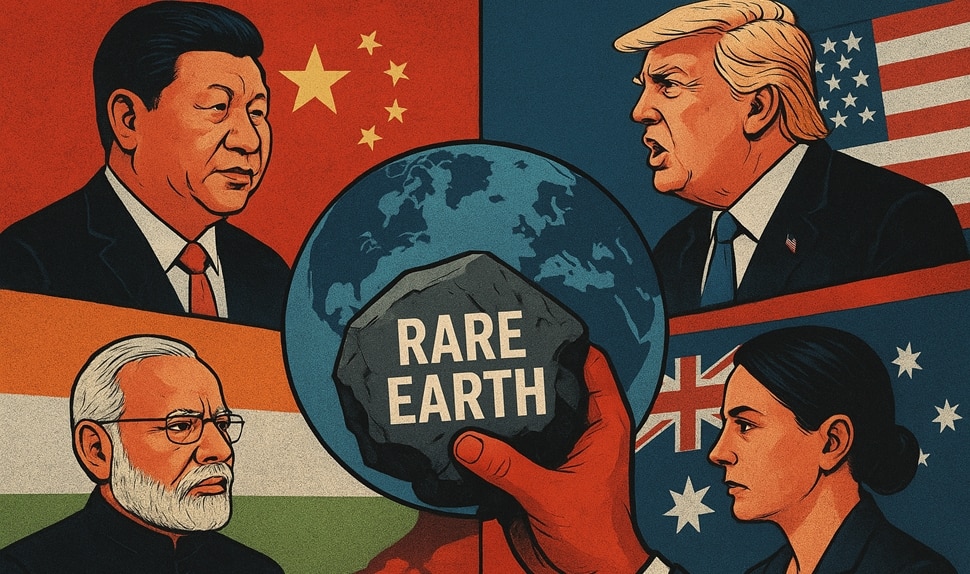
The new restrictions hit global markets instantly. Prices for neodymium-praseodymium oxide — key for high-performance magnets — spiked by almost 12% within a week, and supply-chain managers in the US and Japan scrambled to assess potential disruptions. For Washington, Canberra, and New Delhi, the message was unmistakable: diversify or be dependent.
India’s Push for Self-Reliance and Alliances
In New Delhi, policymakers see the rare earth challenge as both a threat and an opportunity. India holds approximately 7.23 million tonnes of rare earth oxide (REO) reserves, along with 13.15 million tonnes of monazite, a key source of thorium for nuclear energy. These deposits — scattered across the coasts of Andhra Pradesh, Tamil Nadu, and Odisha — could make India a major player if processing capacity scales up.
Minister of State Jitendra Singh recently told Parliament that India is “pulling out all the stops” to deepen ties with countries rich in rare earths. Agreements already exist with nations such as Australia, Argentina, Zambia, Peru, Zimbabwe, Mozambique, and Malawi, while talks with Brazil and the Dominican Republic are underway.
India is also aligning strategically with like-minded democracies. A new India-Japan pact focuses on critical minerals and aims to build resilient supply chains insulated from geopolitical shocks. The cooperation includes joint exploration projects, technology exchange for sustainable mining, and even plans for deep-sea mineral extraction — a frontier where both nations see untapped potential.
The US-Australia Front
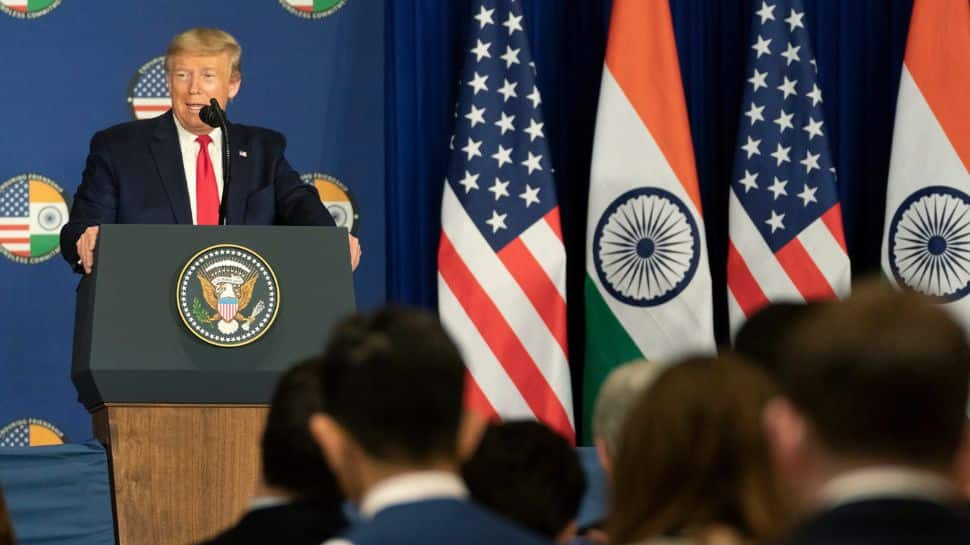
Across the Pacific, Washington and Canberra are moving in lockstep. Just days after Beijing’s announcement, President Donald Trump hosted Australian Prime Minister Anthony Albanese at the White House to sign a landmark Critical Minerals Agreement.
“We’ve been working on rare earths and critical minerals for quite a while,” Trump remarked, hinting at new joint investments. “In about a year from now, we’ll have so much critical mineral and rare earths that you won’t know what to do with them. They’ll be worth $2 billion.”
Australia — home to the world’s third-largest reserves of rare earths — has become America’s most trusted partner in securing non-Chinese supplies. The deal aims to expand production capacity in Australia and establish processing facilities in the US, ensuring that the minerals extracted from Australian soil feed directly into American EV, defense, and semiconductor industries.
Rare Earths: The New Geopolitical Oil
From Washington’s defense corridors to New Delhi’s energy ministry, the phrase “rare earth” has become synonymous with national security. These elements are essential for EV batteries, wind turbines, precision-guided missiles, and 5G networks — technologies central to both the green transition and next-generation warfare.
As the world races toward net-zero goals, demand for rare earths is expected to triple by 2035, according to the International Energy Agency (IEA). Yet production remains dangerously concentrated. This imbalance is pushing nations to rethink trade policy, mining strategy, and even their diplomatic playbooks.
The parallels with oil in the 20th century are hard to miss. Just as OPEC once dictated energy flows, China today controls the invisible backbone of the clean energy economy. But the race to reshape that balance has already begun — from India’s coastal sands to Australia’s desert mines and America’s industrial heartland.
The Next Phase
While competition dominates headlines, collaboration may ultimately shape the new mineral order. Strategic alliances — like those between India and Japan, or the US and Australia — could create a web of supply chains that dilute China’s dominance without provoking open confrontation.
In that sense, rare earths are not just the new oil; they are the new diplomacy — powering a world where energy security, technological ambition, and geopolitical strategy are all cut from the same metallic thread. In a world where every electric car, smartphone, and satellite depends on invisible minerals pulled from the earth, control over rare earths may soon define global power itself.