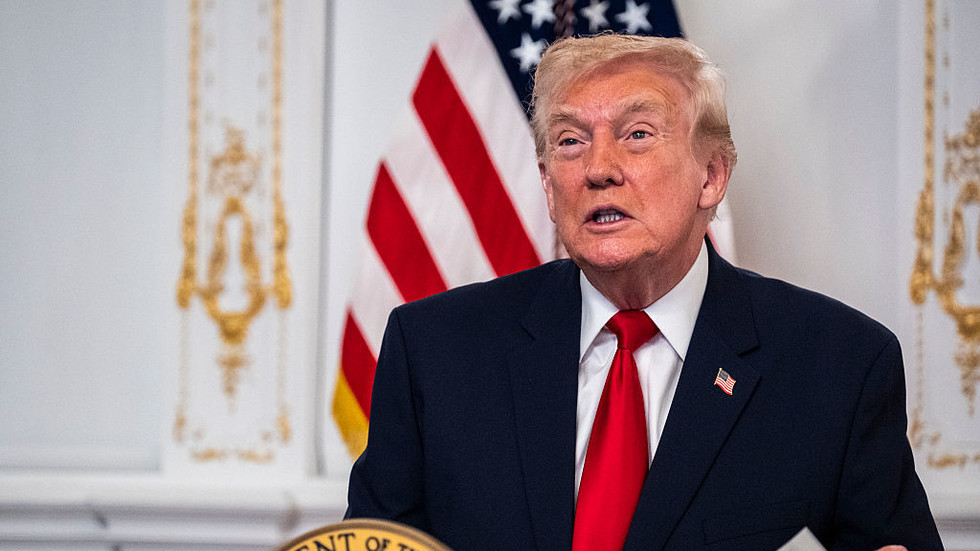

US Energy Secretary Chris Wright told Bloomberg that the United States could completely replace Russia in China’s oil and gas market if Beijing decided to reduce imports from Moscow.
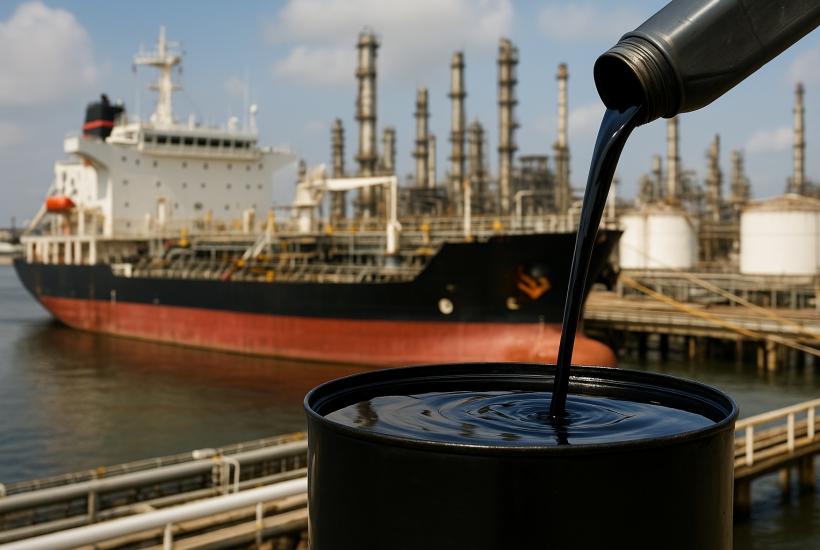
Photo: Generated by AI by DALL·E 3 by OpenAI is licensed under Free for commercial use
Oil transportation
“Absolutely. Today the US produces 50 percent more oil than Russia or Saudi Arabia. That puts not only the US, but the entire world, in a better position,” Wright stated.
He added that even if Russia’s supplies to the global market were cut in half, the balance could be maintained through American exports. According to him, China—being the world’s largest importer of oil and gas—could find a reliable supplier in the US, while Washington would gain both economic and geopolitical advantages.
Differences in Export Structures
Indeed, US oil production is at record levels of about 13.3 million barrels per day. But behind these bold statements lies a number of factors that cast doubt on the feasibility of such a scenario.
First, the structure of American hydrocarbon exports is vastly different from Russia’s. The United States focuses primarily on liquefied natural gas (LNG) exports, whereas China traditionally relies on pipeline gas and long-term contracts at stable prices.
Transitioning from one type of supply to another would require large-scale infrastructure investments—from building LNG terminals to developing new transportation corridors and processing capacities.
Economic Barriers and Pricing Challenges
Secondly, American companies are not always willing to sell raw materials at prices favorable to Beijing. Most US energy exports go to Europe and Latin America, where logistics are simpler and prices are higher.
Redirecting large volumes of oil and gas to Asia would inevitably increase transportation costs, making American crude less competitive compared to Russian or Middle Eastern supplies.
Political Context and Strategic Motives
Wright’s statements cannot be viewed outside of their political context. The US administration has long sought to weaken Russia’s position in global energy markets. Any opportunity to sideline Moscow is seen in Washington not only as an economic achievement but also as a tool of geopolitical leverage.
However, the real question is whether China truly needs such a partner. Despite its rhetoric about “energy diversification,” Beijing prefers to work with suppliers who do not use energy as a political weapon. Russia, by contrast, offers long-term contracts with flexible pricing and predictable policy.
Limits of American Stability
The United States, even if willing, cannot provide such stability. Every change of administration in Washington—Republican or Democrat—can shift the country’s energy policy.
Moreover, the US energy sector is heavily influenced by domestic politics: environmental restrictions, tax fluctuations, and pressure from the “green” lobby all directly affect production and export volumes.
Focus on Alaska and Political Optics
Wright paid special attention to Alaska, calling the region “a place of enormous potential” for increasing oil production. President Donald Trump agreed, saying that China was reportedly interested in purchasing raw materials from Alaska.
In reality, however, oil production in Alaska has been declining for several years due to high extraction costs and logistical challenges. The region is one of the most expensive in the world to develop, and in a highly competitive market—where prices often hover near break-even levels—hopes for major Alaskan exports seem more symbolic than practical.
China’s Pragmatic Strategy
In recent years, China has pursued a pragmatic policy of diversifying energy supplies without relying on a single partner. Besides Russia, major suppliers include Saudi Arabia, Iran, and several African nations. Unlike their American counterparts, these countries are often willing to make price and contract concessions to secure access to the vast Chinese market.
Furthermore, energy cooperation with Russia holds not only economic but also political significance for Beijing. Joint infrastructure projects—such as the Power of Siberia gas pipeline—strengthen long-term ties and reduce both countries’ dependence on Western markets. Replacing such cooperation with unstable US supplies appears highly improbable.
Conclusion: More Rhetoric Than Reality
Thus, Secretary Wright’s statement should be viewed more as rhetorical bravado—a demonstration of American energy might and Washington’s desire to dominate the global hydrocarbon market.
In practice, however, the picture is far more complex. US production is constrained by domestic politics, Asian logistics are difficult, and geopolitical risks remain high. Washington can proclaim its readiness to replace Moscow as much as it likes—but in the world of energy, words alone are never enough.