
Accra, Ghana — It is estimated that 90% of African children in school are unable to read or write, and the situation is worse in conflict-affected areas.
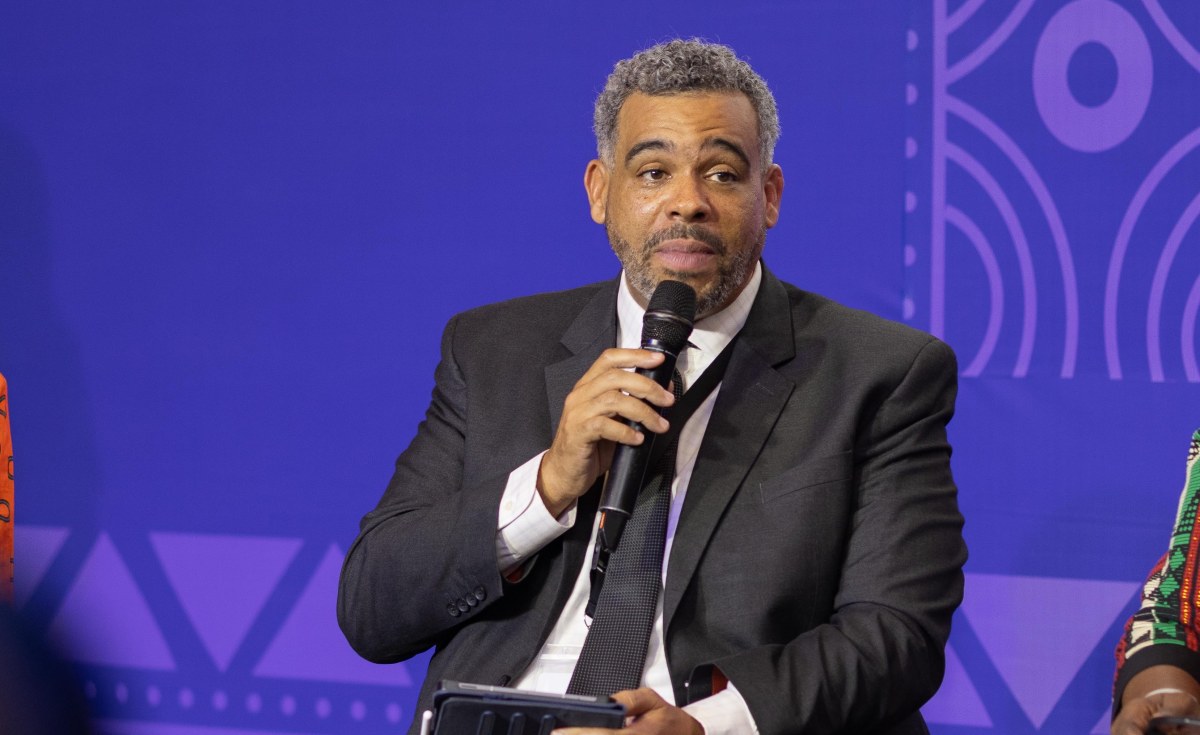
Benjamin Piper, the Director of Global Education at the Bill & Melinda Gates Foundation, described this learning crisis as “a heartbreaking statistic.” He said that the situation reflects a system that has not yet fully oriented itself toward learning.
‘How did we get here?’ he asked.
“We got here because the system has not fully oriented itself to learning,” Piper said. “There are many things that education systems do, but we haven’t yet gotten everyone’s head focused on the core question of whether or not every child in rural Africa can actually have these basic skills.”
Follow us on WhatsApp | LinkedIn for the latest headlines
Piper said that weak goal-setting, inadequate resources, and neglect of learning and instruction have contributed to the crisis. He said that while large class sizes are a challenge, successful interventions have shown that progress is possible even under difficult conditions. Many African countries have invested heavily in expanding access to education, building classrooms, and hiring teachers, but too little attention has been paid to what children are actually learning. “We neglected learning. We neglected instruction,” he said. “But that’s a solvable problem.”
Foundational learning is where the solution begins, he said.
“Foundational learning is the basement of the house; it’s what the rest of education is built on,” Piper said. “For young children in the beginning parts of primary school, grades one to three, the question is whether they have the literacy and numeracy skills needed to build the rest of the house.” In most of these countries with good instruction, every child should be able to read, write, and do basic math by the age of three. The rest is built upon that, he said.
Piper added that without these core foundations of learning, from education to STEM, to the job market, to technical training, TVET, and job readiness, rests on shaky ground.
The learning crisis is fundamentally solvable in Africa.
“The learning crisis is fundamentally solvable in Africa,” he said. “We’ve seen countries combine the right technical inputs to make real progress. Effective foundational learning programs can cost as little as U.S.$6 per child per year. Now, it’s not a magical U.S.$6. It has to be six dollars spent on the right things.”
He cited Zambia’s Catch Up program and Kenya’s Tusome initiative as examples of cost-effective interventions that have achieved measurable results through structured lesson plans, teacher training, and strong classroom support. Some provinces in South Africa are experiencing some exciting results with structured pedagogy. This means lesson plans, workbooks, or student books, as well as training. Many interventions are working in different contexts. The program in Senegal has shown pretty substantial impacts with a new intervention.
“One of my team members just returned from Morocco to see learning outcomes. Some members of the sector returned from India about a month ago to see a large scale, some states that were bigger than all; all but four countries in the world had substantial learning outcomes. We can do it, he said, at an affordable price. “That doesn’t mean that budgets aren’t under pressure,” he said.
But sustaining these efforts requires steady financing and political will. “Governments are already spending more than 90% of education budgets, mostly on salaries,” Piper said. “The challenge is to make sure that education spending is protected and that the right resources – textbooks, teacher training, and coaching – are prioritized.”
“If governments and leaders are worried about secondary, they’re worried about transition rates to tertiary, they’re concerned about jobs, about making sure young people have jobs, the evidence suggests that looking at that problem as a problem in isolation leads to too late resolution,” he said. “If you wish to fix children at the age of 15 to ensure that they graduate from secondary school. If they haven’t learned the basics at six or seven, it’s already too late. They lack the necessary skills.”
“The same child could be taught these basic skills when they’re five or six or seven and would never have to worry about not graduating or failing exams. When it comes to jobs, you think about it this way: numeracy. So, the ability to solve problems is the first step toward STEM education. In my experience, many African countries are interested in STEM as a fundamental part of economic growth. STEM education does not begin at 17 years old. You begin teaching them these basics when they are quite young,” he said.
Piper recalled that when he was in Botswana about a year ago, he saw kids in fifth grade trying to do six times seven. “Instead of knowing six times seven… These wonderful children, fifth graders, drew a list of six circles, another list of six circles, six, six, six times seven, and counted them one by one by one by one,” he said. He said that without mastering these early skills, young people will struggle to compete in modern economies.
“One of the exciting things to show on the content right now is how African talent can develop jobs and create new ones,” he added. “There is a very close connection between foundational learning and the jobs agenda, and we’re excited to see more countries on the continent recognize and respond to that.”
Finance remains the biggest issue in improving foundational learning.
Piper said that most of the education budget in African countries already comes from domestic resources, largely directed toward salaries. “The question now,” he said, “is to make sure that they can protect education spending so that core elements like textbooks, teacher guides, and training are adequately funded. This package can cost between $4 and $6 per child per year, with a reduction over time. It would be possible for all these kids to have the basics if we could defend that amount of resources.”
He added that while partners such as philanthropy and development agencies can play a supportive role, “the primary burden remains on governments,” praising countries that have “decided that this is our problem, and we are going to solve it.”
As the world edges closer to 2030, the target year for achieving the Sustainable Development Goals (SDGs), Piper said that the SDG targets were necessary. He said that being able to show the relationship between learning and outcomes is important. So we’ve made some progress.
Piper said that while many countries now have a clearer understanding of their learning outcomes, the real challenge lies in translating that awareness into action. He said nations are now entering the crucial phase of designing government-led and government-owned interventions to address poor results. He said that setting global education goals such as SDG4 was only the starting point – the real progress depends on implementing evidence-based solutions and giving countries the time, support, and encouragement they need to achieve lasting improvement.
“Having a goal is just the beginning,” he said. “What matters now is designing government-led, evidence-based interventions that respond to those targets.”
Gates’ focus
Piper said the Gates Foundation has made foundational learning its top education priority, with a new strategy recently approved by Bill Gates himself. The focus, he explained, is on supporting governments, leaders, and local partners in Sub-Saharan Africa and India who are committed to improving learning outcomes. The foundation is also encouraging greater South-South collaboration, helping African countries learn from each other as well as from nations like India and Brazil.
Foundational learning is the thing to invest in.
He added that the foundation aims to back African-led efforts such as the new FLAT initiative, which empowers governments to design and implement their own evidence-based programs to improve foundational learning. Piper said he was encouraged by the strong leadership shown by ministers of education and senior officials at the conference, saying that “they are clear that they are more concerned about their children than anyone else and that they have a plan to improve learning outcomes.”
He expressed optimism about the growing culture of collaboration across the continent, saying that partnerships between countries like Zambia, Kenya, Tanzania, and Senegal show how shared learning can drive progress. Drawing inspiration from Kwame Nkrumah’s vision of a united Africa, Piper said the continent’s education leaders are now applying that same spirit of unity to foundational learning.

Sign up for free AllAfrica Newsletters
Get the latest in African news delivered straight to your inbox
Beyond these, the foundation supports innovation projects aimed at addressing gaps in areas such as numeracy, educational technology, and artificial intelligence (AI). He said the newly launched Numeracy R&D (NRD) Program, which brings together partners in seven countries to generate fresh evidence and design effective interventions for early-grade numeracy, an area he said has often been neglected compared to literacy.
He said the foundation is also investing in AI-based solutions to assist teachers. These tools can aid in lesson planning, grading, and language-appropriate instructional support. For AI to be relevant and effective, Piper said, local data sets, such as voice samples from African children and teachers, must be used.
The key lesson Piper has learned from years of working across Africa is that meaningful improvement in learning begins in the classroom.
“It’s all about what that individual teacher does,” he added, stressing the importance of providing teachers with the right materials, support, and training. He cited successful examples like Senegal’s ARED program, which won the Yidan Prize for its innovative approach to literacy instruction, as evidence that well-designed, teacher-centered interventions can yield substantial gains.
In addition, Piper said governments should be responsible for education financing, particularly since international donor support is falling. He said many African ministers are already stepping up to protect education budgets and prioritize learning, with the Gates Foundation playing a supporting role by offering technical assistance and catalytic funding. To ensure relevance, the Foundation is funding African-based AI datasets that reflect local languages and classroom realities. “If we make smart investments, we can make sure it works for our teachers and kids,” he said.
For Piper, the message is clear: Africa’s learning crisis can be solved, but only if the continent builds its house on a stronger foundation.