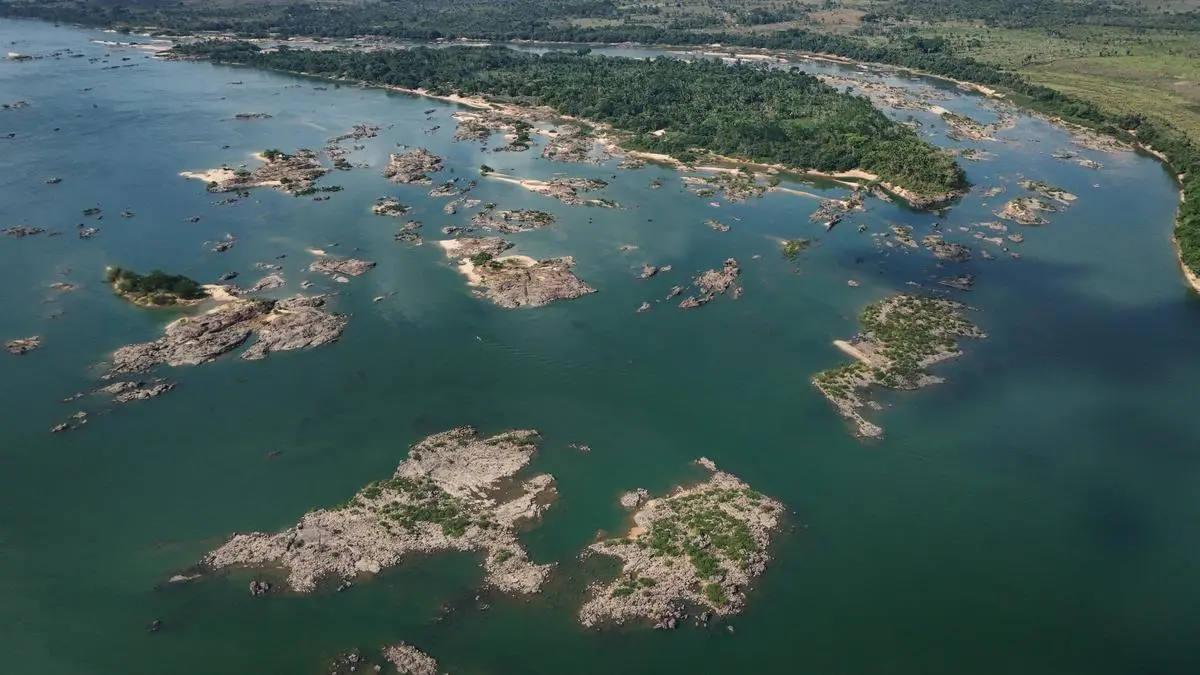

Deep in the Amazon, Indigenous women say they fear getting pregnant. Rivers that have been the lifeblood of their people now carry mercury from illegal gold mining, threatening the health of their unborn children.
“Breast milk is no longer reliable,” said Alessandra Korap, a leader of the Munduruku people.
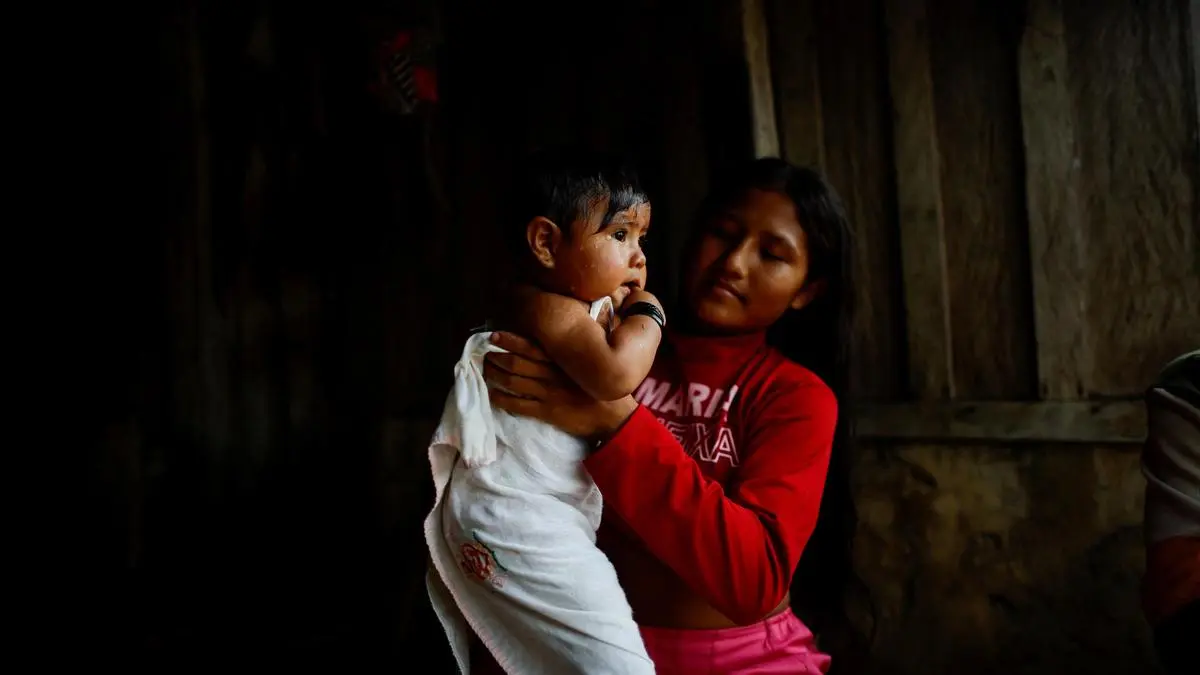
At Sai Cinza, a Munduruku community surrounded by illegal mines, the family of three-year-old Rany Ketlen struggles to understand why she has never been able to raise her head and suffers from muscle spasms.
Scientists may soon have an answer. Rany is one of at least 36 people in the area, mostly children, with neurological disorders not explained by genetic tests, according to preliminary data from a groundbreaking study into the impacts of mercury contamination.
While scientists have warned of the risks that mercury could pose to Indigenous children in the Amazon, none have established a causal link to disabilities in their communities, as this study may soon do.
EAT THE FISH POISONED BY MERCURY OR GO HUNGRY
Rany’s father, Rosielton Saw, has worked as a miner near their village for years, following in the footsteps of his father, Rosenildo.
Sitting at the family’s one-bedroom wooden home, the older man said he knew the mercury they used was dangerous.
But mining about 30 grams of gold per week provides just “enough to support ourselves,” Rosenildo Saw said.
The family regularly eats surubim, a carnivorous fish that accumulates mercury in the river biome. Rany Ketlen, who has severe swallowing problems, drinks the fish broth.
In recent years, government health officials have reported dozens of other patients in the wider region suffering from similar disorders. But a lack of testing and access to medical care has made it difficult to compile a full picture of the problem or establish the exact causes.
Now researchers are collecting data on neurological problems known to be associated with mercury poisoning, ranging from acute brain malformation to memory issues, in a multi-year study concluding by the end of 2026.
The scientists involved in the latest unpublished research, backed by Brazil’s leading public health institute, said a top suspect is the mercury seeping into waterways after miners use it to bind tiny specks of gold extracted from riverbanks – a largely lawless trade spurred on by record-high prices for the precious metal.
The mercury has contaminated river fish that are a staple for Indigenous communities and accumulated in women’s placentas, breast milk and offspring at alarmingly high levels, often two or three times the hazardous threshold for pregnant mothers.
Chief Zildomar Munduruku, who is also a nurse, said he cannot tell his people to stop eating fish, despite guidance from health officials.
“If we obey their rules, we will go hungry,” he said.
EVEN IF MINING STOPS, MERCURY WILL LINGER
Far downstream from Sai Cinza, diplomats and world leaders gather next month in the Amazon for the United Nations climate summit, known as COP30. Brazilian organizers have called it the “Forest COP,” focusing global attention on threats to tropical rainforests and their inhabitants, such as illegal mining across the region.
Brazilian President Luiz Inacio Lula da Silva has driven thousands of miners out of Indigenous lands since he returned to office in 2023. But the mercury left behind cannot be broken down as it cycles through air, water, and soil, fueling a lasting health crisis.
Brazil’s government has stepped up monitoring of mercury levels in the Munduruku Indigenous Territory, trained public health officials to identify early signs of mercury poisoning and invested in clean water sources for remote communities, the Health Ministry said in a statement.
Even if “gold mining in the Amazon came to a complete stop, the mercury that was deposited … would remain for many more decades,” said Paulo Basta, a researcher at public health institute Fiocruz, who has studied mercury contamination of Indigenous people for more than three decades.
Papers, interviews and fresh data reviewed by Reuters suggest the humanitarian crisis unleashed by illegal mining will have permanent consequences for current and future generations of Indigenous communities in the Amazon.
A 2021 study by Basta and his colleagues found 10 of 15 mothers tested in three Munduruku villages had elevated mercury levels. An earlier study found 12 of 13 people in a Yanomami village where mining was rampant had dangerous mercury levels in their bloodstream. Nearly all the 546 registered cases that were in the government’s databases by March 2025 were collected by Basta and his team.
“That’s just the tip of the iceberg,” Basta said. The Munduruku, Yanomami, and Kayapó territories have populations of tens of thousands of people who could potentially be contaminated by mercury.
PROVING CAUSATION IS NOT EASY
In the study now underway, Basta’s team aims to provide a crucial missing link in the puzzle: proof that mercury is causing disabilities. For that, they are following 176 pregnant women to test babies during their first years of life.
At Sai Cinza, where Rany Ketlen and her family live, the researchers’ preliminary data showed that, on average, mothers in the study had mercury levels five times higher than the Brazilian Health Ministry considers safe and their babies had three times that level. Rany Ketlen’s sister, one-year-old Raylene, is one of them, though she has not yet shown any symptoms.
“This mercury disease, if you don’t look for it, you won’t find it,” said Cleidiane Carvalho, a nurse who set out years ago to connect researchers with the sick Indigenous children she came across. Without their studies, she worried, the crisis “will be silenced, neglected forever.”
But proving a causal link to mercury contamination has been a challenge.
Fiocruz researchers found that Indigenous communities often lack basic health services and are vulnerable to various infectious diseases, all potential causes of neurological problems. Marriage among close cousins, which can cause genetic disorders, is also more common in small Indigenous communities.
It is likely that mercury is among the causes of the conditions of the 36 patients who did not have an inherited genetic disorder, but that does not rule out other factors, said Fernando Kok, a geneticist at the University of Sao Paulo who is working on the Fiocruz study.
Exams that find mercury in people’s bodies are like snapshots of a patient’s recent diet, so they alone cannot prove a prior contamination as a cause of neurological problems.
“It’s a perfect crime, because it leaves no signature,” Kok said.
Published on November 1, 2025