
- Sweden is one of the world’s largest exporters of forest-based products: paper, timber, cardboard and biofuels travel across the globe, ending up in your packaging, your books, in your home.
- A recent government proposal encourages fertilization with nitrogen to speed up tree growth, which may work in the short term but eventually fails and is leached into waterways, altering ecosystems and being released back into the atmosphere as greenhouse gases.
- “If a country with some of the world’s largest intact boreal forests chooses to double down on short-term extraction, it will not only undermine the EU’s climate goals — it will send a dangerous signal to other forest nations, from Canada to Brazil, that soil and biodiversity can be sacrificed in the name of so-called green growth,” a new op-ed argues.
- This post is a commentary. The views expressed are those of the author, not necessarily of Mongabay.
The deep, dark forests of northern Europe supplied people with wood, timber and food for millennia. They gave rise to myths, legends and fairy tales, and offered refuge to the persecuted. Over time, though, the forests themselves became subjugated, forced to submit to the will of humankind as forestry turned into a mighty machinery.
Sweden is one of the world’s largest exporters of forest-based products: paper, timber, cardboard and biofuels travel across the globe, ending up in your packaging, your books, in your homes. Decisions made in Sweden about how forests are managed ripple outward far beyond the kingdom’s borders. That is why the Swedish government’s recent forestry inquiry should matter not just to those living in Sweden, but to anyone concerned about the global climate crisis.
The inquiry’s central message is clear: increase forest growth, harvest more biomass, and thereby contribute to the green transition. This might sound promising. More trees mean more carbon absorbed, more wood products to replace unsustainable products. But the plan overlooks the most important part of the forest: the soil.

Most of the carbon in a forest is not in the trees we see, but locked into the ground, in roots, humus, fungi, microbes, and the intricate networks of life below. When forestry is intensified — through shorter rotation times, clear-cutting, heavy machines compacting the earth, and the removal of branches and stumps — this underground storehouse of carbon is steadily eroded. The soil becomes poorer, biodiversity thins, and the forest’s long-term ability to absorb carbon declines.
The government’s proposal even encourages fertilization with nitrogen to speed up tree growth. This can work in the short term, but after a decade, the effect largely disappears. The nitrogen has by then leached into waterways, altering ecosystems, and been released back into the atmosphere as greenhouse gases. Meanwhile, the delicate underground webs of fungi and microbes that sustain the soil are disrupted. The quick gains vanish, but the damage remains.
This matters not only to scientists and foresters. A forest that loses its soil health is like a society eroding its institutions: collapse may be delayed, but it is inevitable.
Even the Greek philosopher Plato described how the hills of Attica had once been rich in soil and forest, able to absorb the rains. “The land reaped the benefit of the annual rainfall, not as now losing the water which flows off the bare earth into the sea.” And history — from the decline of Mesopotamia to America’s Dust Bowl — shows again and again that when we exhaust the natural systems that sustain us, a crisis ensues. Civilizations crumble, desperate refugees try to find new homes.
There are better choices. Forests can be managed with longer growth cycles, leaving more organic material in place to feed the soil. Mixed forests with trees of different ages and species can create resilience against storms and pests. Sensitive soils — peatlands, wetlands, steep slopes — should be protected outright. And we must measure forest health not only by how much wood is standing, but by how alive the soil beneath remains.

Even predators like brown bears, lynxes and wolves play a part. By keeping ungulate populations in check, they reduce browsing pressure on young trees and shrubs, allowing more diverse vegetation to grow. That vegetation feeds the soil, builds humus, and locks in carbon. Large carnivores are allies in keeping the forest floor alive.
Yet in Sweden, these animals are all under heavy hunting pressure, driven less by ecological necessity than by political efforts to appease a small minority of hunters. This shortsighted management weakens the natural systems that could help restore balance to our forests.
The Swedish forestry model is often presented as a success story, a way of combining economic growth with renewable resources. But Swedish forestry has confused renewable with sustainable. A tree can be regrown, but soil lost to compaction, erosion or nutrient depletion may take centuries to rebuild.
Forests are not commodities, interchangeable and endlessly replaceable. They are living systems that regulate water, store carbon, harbor biodiversity, and — if cared for — provide humans with timber and fuel as well. Treating them as raw material alone is not stewardship; it is liquidation.
And this is why what happens in Sweden matters far beyond Sweden. If a country with some of the world’s largest intact boreal forests chooses to double down on short-term extraction, it will not only undermine the EU’s climate goals — it will send a dangerous signal to other forest nations, from Canada to Brazil, that soil and biodiversity can be sacrificed in the name of so-called green growth.
The choice before Sweden is simple, but its consequences are vast. We can continue to present forestry as a climate solution while ignoring the slow depletion of the soil that makes it possible. Or we can choose to align forestry with true sustainability — protecting the invisible networks beneath our feet, slowing down where needed, and rewarding landowners who keep forests standing for the sake of climate and future generations. The value of a forest’s ability to lock away carbon cannot be overstated.
If Sweden does not get this right, what happens in Sweden’s forests will not stay in Sweden’s forests.
Emil Siekkinen is an environmental writer and advocate focused on ecological justice, biodiversity, and the intersection of law and nature.
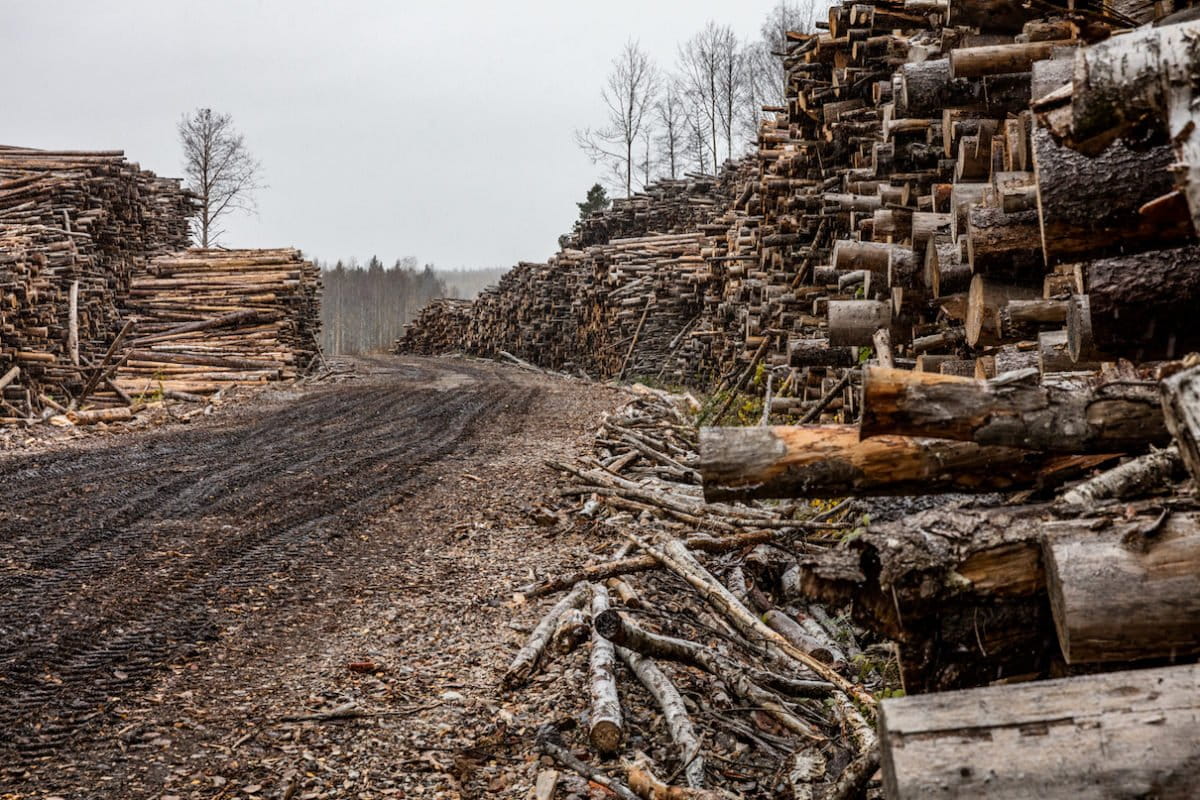
Banner image: Logging operation in Sweden. Image courtesy of Marcus Westberg.
Related listening from Mongabay’s podcast: An alternative view for forests lies in regeneration, listen here:
See related coverage:
How unsustainable is Sweden’s forestry? ‘Very.’ Q&A with Marcus Westberg and Staffan Widstrand
Citation:
Felton, A., Belyazid, S., Eggers, J., Nordström, E., & Öhman, K. (2023). Climate change adaptation and mitigation strategies for production forests: Trade-offs, synergies, and uncertainties in biodiversity and ecosystem services delivery in Northern Europe. Ambio, 53(1), 1-16. doi:10.1007/s13280-023-01909-1