
Friday, December 5, 2025
  • Login
198 Brazil News
No Result
View All Result
  • Home
  • BUSINESS NEWS
  • FEATURED NEWS
    • BRAZIL USA TRADE NEWS
    • BRAZIL INDIA NEWS
    • BRAZIL NIGERIA NEWS
    • BRAZIL UK NEWS
    • BRAZIL EU NEWS
    • BRAZIL RUSSIA NEWS
    • BRAZIL AFRICA NEWS
    • BRAZIL GULF NATIONS NEWS
  • POLITICAL NEWS
  • MORE NEWS
    • BRAZIL CEO NETWORKS
    • BRAZIL CRYPTO NEWS
    • BRAZIL IMMIGRATION NEWS
    • BRAZIL TECHNOLOGY NEWS
    • BRAZIL MANUFACTURERS
    • BRAZIL JOINT VENTURE NEWS
    • BRAZIL AGRICULTURE NEWS
    • BRAZIL UNIVERSITIES
    • BRAZIL VENTURE CAPITAL NEWS
    • BRAZIL PARTNERSHIP NEWS
    • BRAZIL BUSINESS HELP
    • BRAZIL EDUCATION NEWS
  • ASK IKE LEMUWA
  • Contact us
  • Home
  • BUSINESS NEWS
  • FEATURED NEWS
    • BRAZIL USA TRADE NEWS
    • BRAZIL INDIA NEWS
    • BRAZIL NIGERIA NEWS
    • BRAZIL UK NEWS
    • BRAZIL EU NEWS
    • BRAZIL RUSSIA NEWS
    • BRAZIL AFRICA NEWS
    • BRAZIL GULF NATIONS NEWS
  • POLITICAL NEWS
  • MORE NEWS
    • BRAZIL CEO NETWORKS
    • BRAZIL CRYPTO NEWS
    • BRAZIL IMMIGRATION NEWS
    • BRAZIL TECHNOLOGY NEWS
    • BRAZIL MANUFACTURERS
    • BRAZIL JOINT VENTURE NEWS
    • BRAZIL AGRICULTURE NEWS
    • BRAZIL UNIVERSITIES
    • BRAZIL VENTURE CAPITAL NEWS
    • BRAZIL PARTNERSHIP NEWS
    • BRAZIL BUSINESS HELP
    • BRAZIL EDUCATION NEWS
  • ASK IKE LEMUWA
  • Contact us
No Result
View All Result
198 Brazil News
No Result
View All Result
Home BRAZIL AGRICULTURE NEWS

Decades of conservation pay off for endangered population in Canada

by Gias
December 5, 2025
in BRAZIL AGRICULTURE NEWS
Reading Time: 6 mins read
A A
0
Decades of conservation pay off for endangered population in Canada
Share on FacebookShare on Twitter


  • Northern bottlenose whale populations have struggled to rebound, even though commercial whaling was outlawed in their habitats more than 50 years ago.
  • Long-term monitoring shows that one population of the species has begun to recover since their year-round habitat, a submarine canyon off Canada’s east coast known as the Gully, became a Marine Protected Area in 2004.
  • The Gully MPA provides a rare marine conservation success story, but protection for marine mammals that migrate is more complex.

Populations of northern bottlenose whales (Hyperoodon ampullatus), playful animals that resemble large dolphins, stretch across the Atlantic Ocean, with each group of whales living year-round in a particular deep ocean canyon. Historically, commercial whaling targeted these animals, causing their numbers across the basin to collapse.

Even as protections against whaling increase, northern bottlenose whale populations struggle to recover globally due to low reproductive rates and ongoing threats such as ship strikes and fishing-gear entanglement.
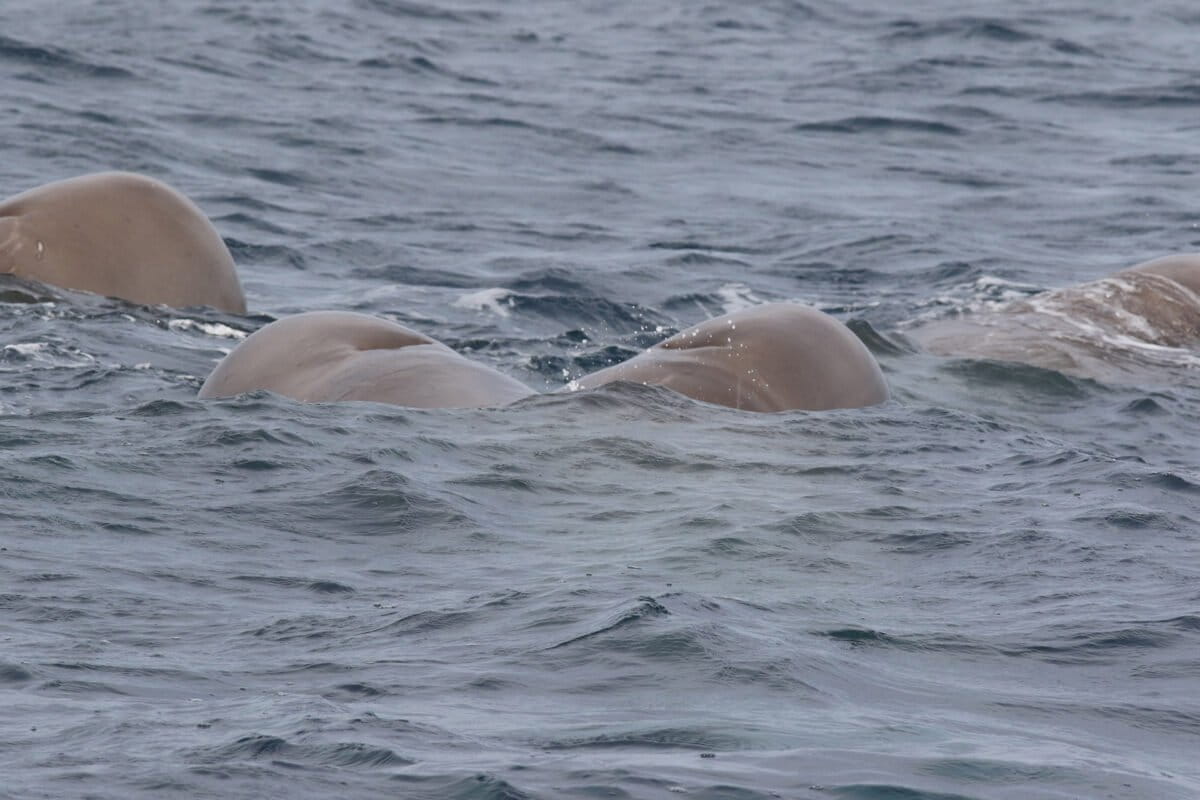
A group of northern bottlenose whales gather at the water’s surface in the Gully, Nova Scotia during a research expedition by the Whitehead Lab in 2017. Image by Deepdivewhales via Wikimedia Commons (CC BY-SA 4.0).

But new evidence from a submarine canyon off the coast of Nova Scotia, Canada, known as the Gully, shows a promising rebound. Commercial fishing and vessel traffic are down in the area, and the endangered northern bottlenose whales in this canyon are growing in number after decades of decline, according to a recent study published in the Journal of Applied Ecology.

The Gully is one of the few places where scientists have monitored a distinct population long enough to track meaningful trends. Roughly as deep and wide as the Grand Canyon, and with steep walls and channels, it provides critical habitat for a group of northern bottlenose whales known as the Scotian Shelf population. “At the broadest scale, submarine canyons stir up the oceanography, and that typically translates into more productivity, life and food—good for everything!” said co-author Hal Whitehead, a marine biologist at Dalhousie University in Nova Scotia, Canada. This population is considered endangered by the Committee on the Status of Endangered Wildlife in Canada.
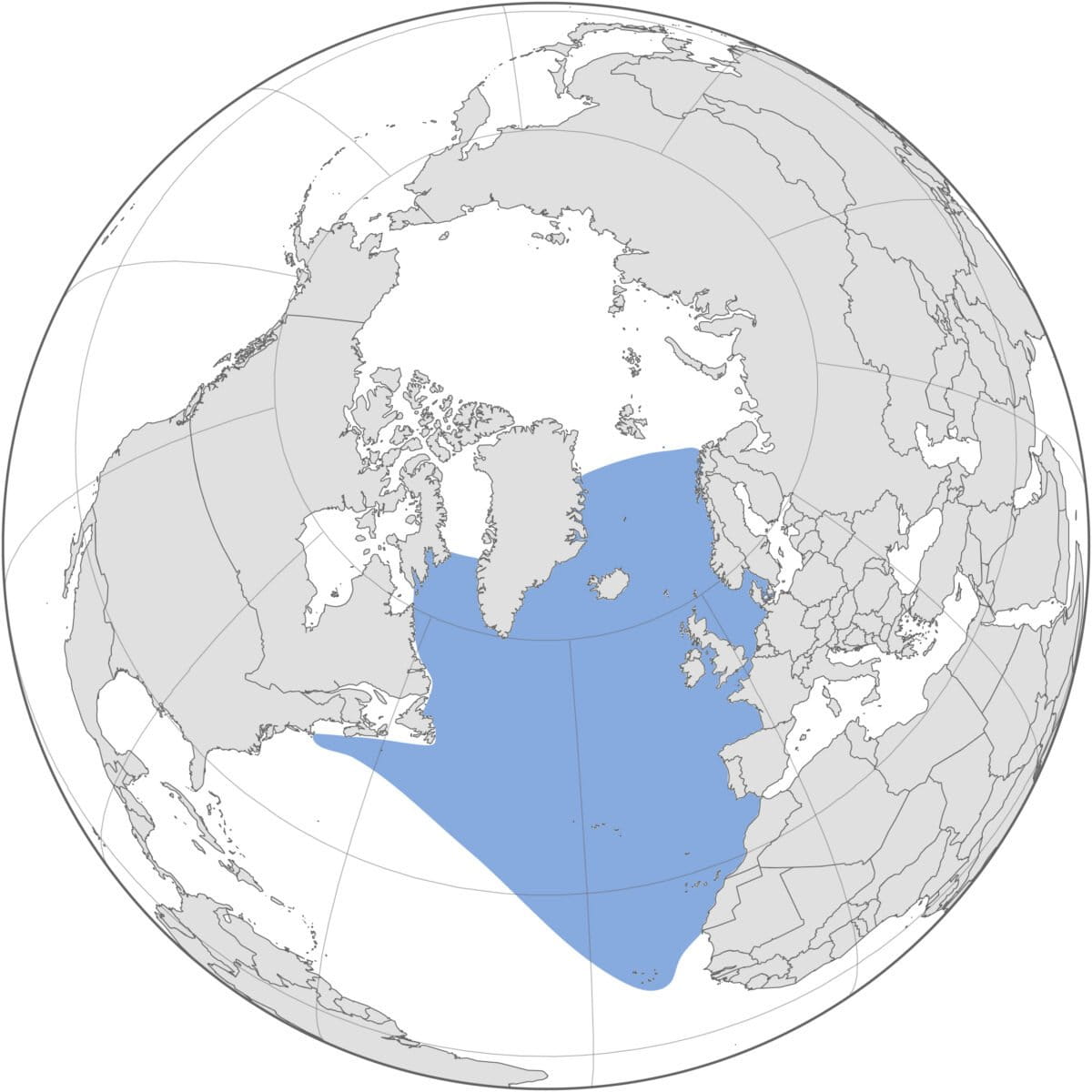
Map of the northern bottlenose dolphin range. Image by Cephas via Wikimedia Commons (CC BY-SA 4.0).

In the deep waters of the Gully’s canyon, the whales travel alone, hunting in the ocean depths for prey including squid and sea cucumbers. But they behave differently at the surface. “These wonderful whales came up to the boat. Unlike most whales, they were friendly,” said Whitehead, who first encountered the Scotian Shelf population of whales on a research trip in 1977. “I thought, wow, that’s very cool.”

However, this friendliness made them easy targets for whalers before Canada banned commercial whaling in 1972. “The whales would come around, and they just slaughtered them all,” said Whitehead. In 1988, researchers began systematically tracking individual whales in the group using sightings and photo-identification while also monitoring human activity in the area. By the mid-2000s, the population had declined to about 130 whales.
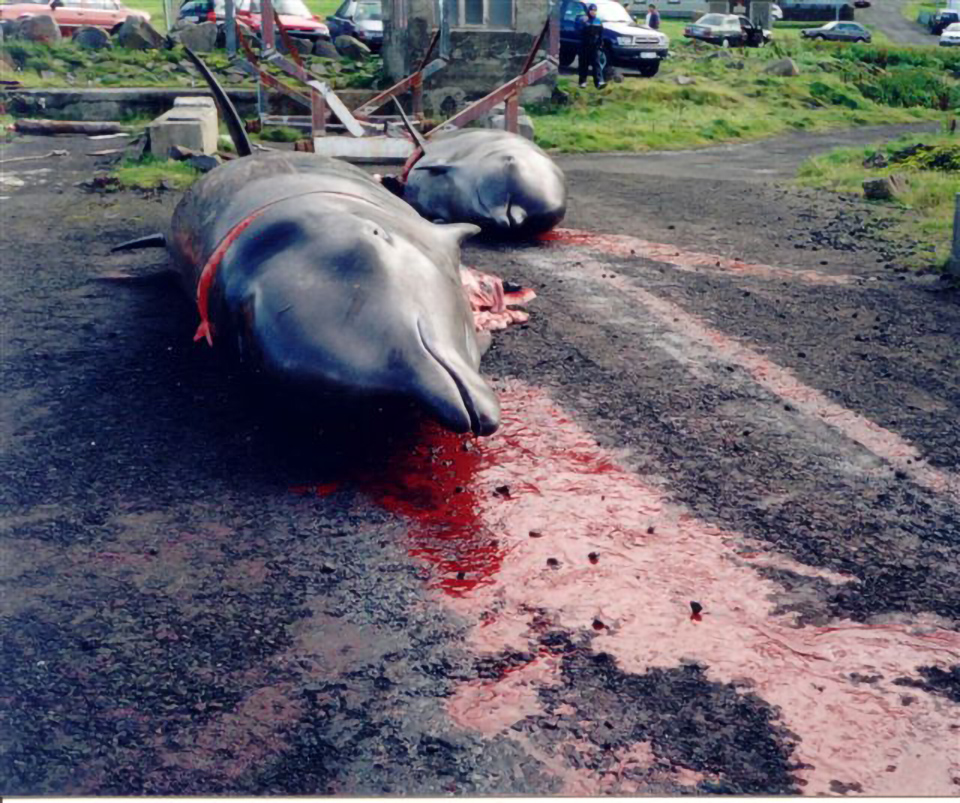
Northern bottlenose whales killed by humans in the Faroe Islands in 2005.Image by Erik Christensen via Wikimedia Commons (CC BY-SA 4.0).
Northern bottlenose whales killed by humans in the Faroe Islands in 2005. Image by Erik Christensen via Wikimedia Commons (CC BY-SA 4.0).

Legislation passed in 1996 gave the Canadian government powers to designate Marine Protected Areas (MPAs). The government worked with experts to find “places that are high value for conservation and good science and lots of rationale that would be good to test the legislation,” said Paul Macnab, senior oceans biologist and project lead for the Gully Marine Protected Area, who was not involved in the study. The Gully was selected and established as an MPA in 2004, rendering commercial fishing and other harmful activities illegal in the core of the habitat, protecting both the whales and their food sources.

To understand whether that protection succeeded in reversing the whales’ decline, researchers used 35 years of observational data to estimate changes to the Scotian Shelf whales and human activity after the introduction of the MPA. They found that fishing and vessel traffic declined in the center of the protected area, and the whale population steadily grew to roughly 210 individuals by 2023, an increase of nearly two-thirds. There are now more whales in the population than were present during Whitehead’s first encounter with them almost 50 years ago.
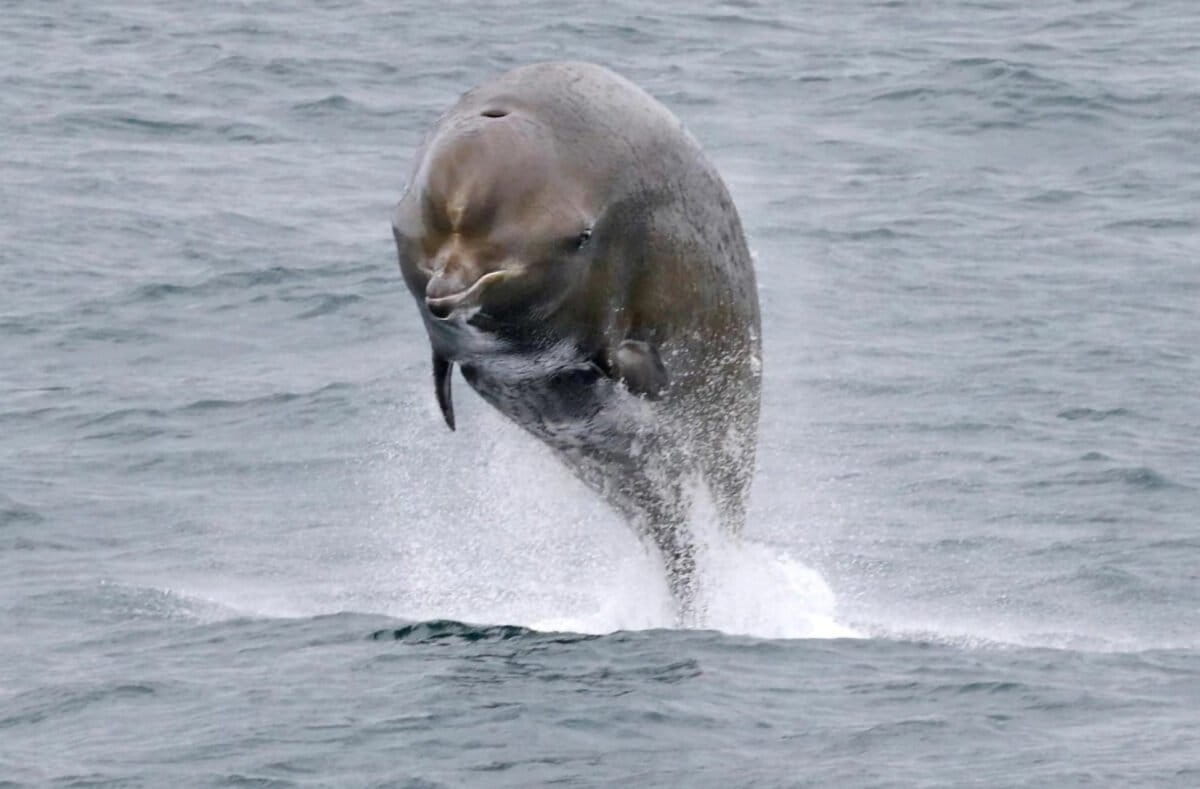
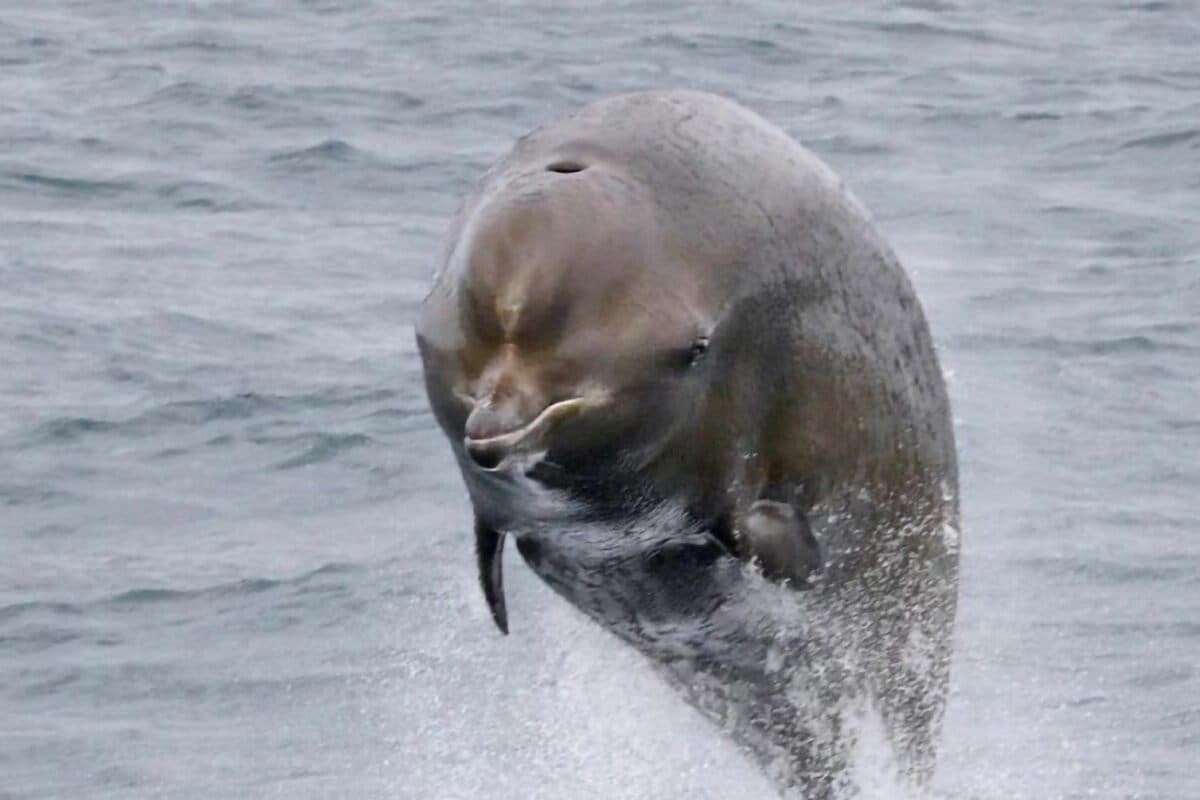
A breaching northern bottlenose soars out of the water. Image by Sanna Isojunno via Wikimedia Commons (CC BY-SA 4.0).

“This study really does provide excellent evidence that knowledge of a species, its needs and its threats can be used to generate conservation success,” said marine ecologist Ari Friedlaender at the University of California, Santa Cruz, who was not involved in the study.

The Gully MPA is a rare success for ocean conservation, but one protected canyon is not enough, Whitehead said. Although the Scotian Shelf population lives in the Gully year-round, other marine animals migrate, which will require a network of protected areas that span across their habitats, creating a trail of safe havens, he said. “For many other species, it’s only part of their habitat, and we have to protect them in a lot of other ways.”

Citation:

Feyrer, L., Walmsley, S. F., Stewart, M. A., MacNeil, M. A., & Whitehead, H. (2025). Reversing decline: The impact of spatial conservation on endangered northern bottlenose whales. Journal of Applied Ecology, 62(9), 2464-2474. https://doi.org/10.1111/1365-2664.70122

Stella Mayerhoff is a graduate student in the Science Communication M.S. Program at the University of California, Santa Cruz. Other Mongabay stories produced by UCSC students can be found here.


Source link

Tags: CanadaConservationdecadesendangeredpaypopulation
Previous Post

Fresh Lens For Nuanced Multifaceted Climate Solutions Needed — Global Issues

Next Post

Positive Breakout: These 9 stocks cross above their 200 DMAs – Upside Ahead?

Related Posts

Protected areas cover just a fraction of global carnivore ranges
BRAZIL AGRICULTURE NEWS

Protected areas cover just a fraction of global carnivore ranges

by Gias
December 3, 2025
SE Asia forest carbon projects sidelining social, biodiversity benefits, study finds
BRAZIL AGRICULTURE NEWS

SE Asia forest carbon projects sidelining social, biodiversity benefits, study finds

by Gias
December 1, 2025
The long life of a Galápagos tortoise
BRAZIL AGRICULTURE NEWS

The long life of a Galápagos tortoise

by Gias
November 29, 2025
What’s at stake for the environment in Honduras’ presidential election?
BRAZIL AGRICULTURE NEWS

What’s at stake for the environment in Honduras’ presidential election?

by Gias
November 26, 2025
What did it deliver for the ocean?
BRAZIL AGRICULTURE NEWS

What did it deliver for the ocean?

by Gias
November 25, 2025
Next Post
Positive Breakout: These 9 stocks cross above their 200 DMAs – Upside Ahead?

Positive Breakout: These 9 stocks cross above their 200 DMAs - Upside Ahead?

Hegseth orders new strike that kills 4 on alleged drug boat amid ‘double tap’ controversy

Hegseth orders new strike that kills 4 on alleged drug boat amid ‘double tap’ controversy

No Result
View All Result

Recent Posts

  • Two CEOs, One Binance: Can Yi He Rise Without Pulling CZ Back Into Power
  • Hegseth orders new strike that kills 4 on alleged drug boat amid ‘double tap’ controversy
  • Positive Breakout: These 9 stocks cross above their 200 DMAs – Upside Ahead?
  • Decades of conservation pay off for endangered population in Canada
  • Fresh Lens For Nuanced Multifaceted Climate Solutions Needed — Global Issues

Categories

  • BRAZIL AFRICA NEWS
  • BRAZIL AGRICULTURE NEWS
  • BRAZIL BUSINESS HELP
  • BRAZIL CRYPTO NEWS
  • BRAZIL EDUCATION NEWS
  • BRAZIL EU NEWS
  • BRAZIL GULF NATIONS NEWS
  • BRAZIL IMMIGRATION NEWS
  • BRAZIL INDIA NEWS
  • BRAZIL JOINT VENTURE NEWS
  • BRAZIL MANUFACTURERS
  • BRAZIL NIGERIA NEWS
  • BRAZIL PARTNERSHIP NEWS
  • BRAZIL POLITICAL NEWS
  • BRAZIL RUSSIA NEWS
  • BRAZIL TECHNOLOGY NEWS
  • BRAZIL UK NEWS
  • BRAZIL UNIVERSITIES
  • BRAZIL USA TRADE NEWS
  • BRAZIL VENTURE CAPITAL NEWS
  • BUSINESS NEWS FROM AROUND THE WORLD
  • VIDEO NEWS FROM AROUND THE WORLD
  • Home
  • Disclaimer
  • Privacy Policy
  • DMCA
  • Cookie Privacy Policy
  • Terms and Conditions
  • Contact us

Copyright © 2025 198 Brazil News.
All Rights Reserved.

Welcome Back!

Login to your account below

Forgotten Password?

Retrieve your password

Please enter your username or email address to reset your password.

Log In
No Result
View All Result
  • Contact
  • Cookie Privacy Policy
  • Disclaimer
  • DMCA
  • Privacy Policy
  • Read the latest updates from Brazil
  • Terms and Conditions

Copyright © 2025 198 Brazil News.
All Rights Reserved.