

Five out of 10 lakes in the central Amazon had daytime temperatures over 37° Celsius, (98.6° Fahrenheit) during the region’s 2023 extreme heat wave, a recent study found.
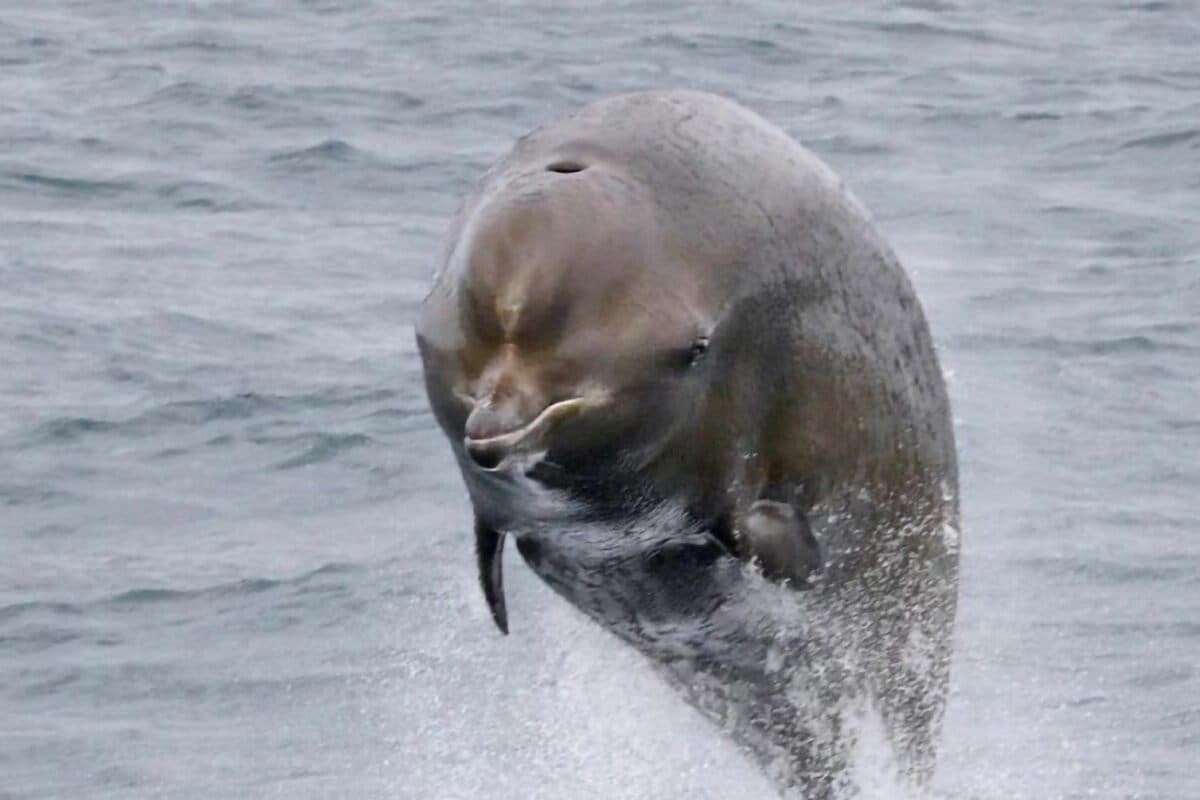
One of the most well-known water bodies is Tefé Lake in Amazonas state, northern Brazil. In September and October 2023, 209 pink and grey river dolphins, roughly 15% of the lake’s population, died in Tefé Lake. The mass mortality happened just as the lake soared to a record 41°C (106°F) across the entire 2-meter (6.6-foot) water column.
“You can’t even put a finger in the water. … It is so hot that your natural instinct is to withdraw your hand,” lead author Ayan Fleischmann, a researcher at the Brazil-based Instituto Mamirauá, told Mongabay by phone. “The temperature is beyond the tolerance limit for most Amazonian aquatic animals.”
Dolphins aren’t the only species that suffered with the heat. In one local fish farm, more than 3,000 fish died as temperatures crossed 35°C (95°F), well over the safe limit for the Amazonian tambaqui (Colossoma macropomum) and pirapitinga (Piaractus brachypomus). Other mass fish deaths were recorded across several states of the Brazilian Amazon.
As the drought continued into its second year, an estimated 20-30 metric tons of fish and other animals, including caimans, turtles and stingrays, died in the Aramanaí Channel in Pará, a waterway connected to the Amazon River.

Researchers recorded temperatures at in situ monitoring sites, then used satellite data and modeling to understand the causes and calculate long-term patterns. According to their models, high solar radiation, reduced water depth and wind speed and muddied waters are the main culprits behind the abnormally high temperatures in lakes.
Their results also show that lakes in the Amazon are warming at a rate of 0.6 °C, or 1.1 °F, every decade.
“It is very alarming,” Fleischmann told Mongabay. “Because lakes are so sensitive to climate, they offer us a warning about these socioecological tragedies we have seen.”
Most of the fish eaten in the Amazon come from lakes, Fleischmann said. So, a breakdown in those ecosystems has widespread impacts for local communities. “Not being able to fish means you enter a situation of food insecurity, and you lose your main source of income if you are a fisher,” he said.
If lakes dry up enough, transportation is also disrupted; kids can’t go to school and supplies can’t get to some remote communities.
“In the Amazon, an extreme drought disrupts the entire riverine way of life, because the way of life of these populations depends on lakes and rivers for everything,” Fleischmann added.
Banner image: Smoke from wildfires fills the air over Lake Tefé in the Amazon. Image courtesy of Miguel Monteiro.