

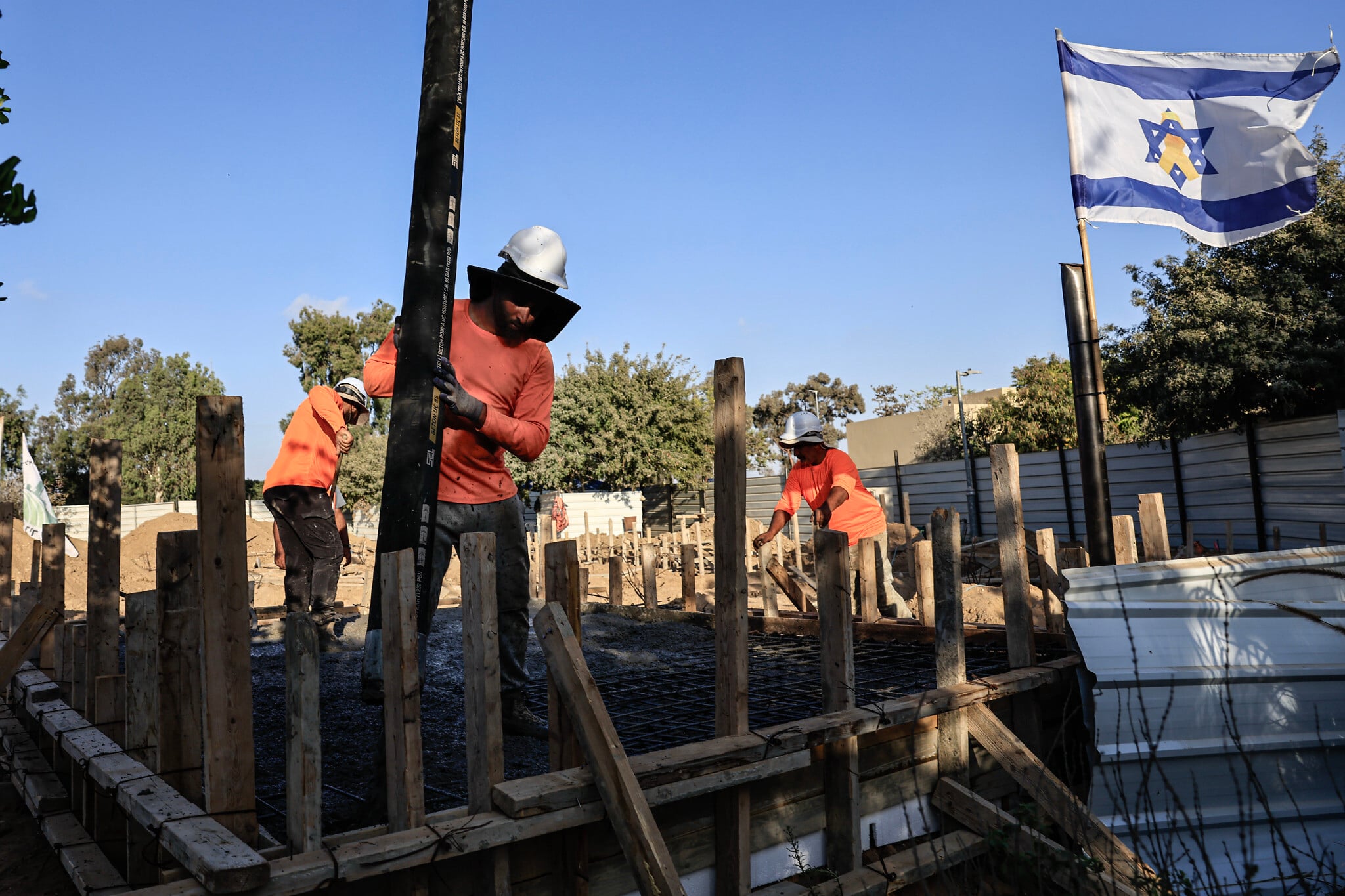
The KKL-JNF Jewish National Fund announced a special rehabilitation budget of NIS 750 million ($220 million) on Monday to help restore and develop communities in northern Israel and the Gaza border area that were severely affected by Hamas’s October 7, 2023, onslaught and the ensuing multifront war.
Transitioning from immediate emergency assistance toward long-term rehabilitation, the organization will spend NIS 75 million ($22 million) of that sum on Kibbutz Nir Oz near the Gaza border.
The community was largely destroyed when Hamas terrorists entered all but six of its over 200 homes on October 7 and either murdered or kidnapped one of every four residents — 117 people out of some 400. Of those abducted, nine are still being held in Gaza, only five of them believed alive.
In April, the management of Kibbutz Nir Oz reached an agreement with the state on an investment of NIS 350 million ($95 million) to rehabilitate and redevelop the community. It was the last community affected by October 7 to do so.
On Thursday, the kibbutz held a cornerstone-laying ceremony for a new pioneer neighborhood, but swiftly suspended the event upon hearing that the cabinet had met to discuss a full-scale military occupation of the Gaza Strip.
During that night, the security cabinet ended up approving a lesser proposal by Prime Minister Benjamin Netanyahu to take over the densely populated Gaza City.
The NIS 75 million will be used to rebuild infrastructure and public facilities, strengthen the community, and support the absorption of returning residents and newcomers.
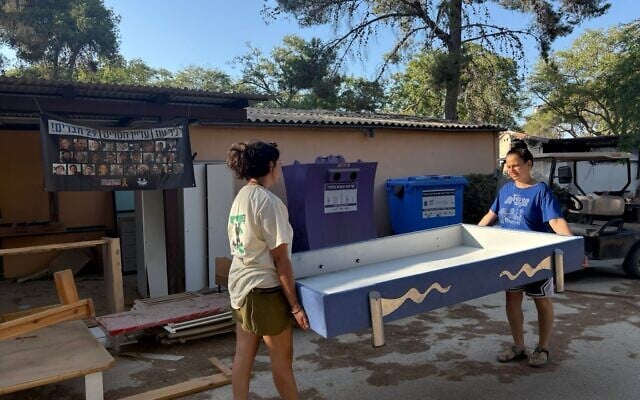
Some of the 50 young adults from Hashomer Hatzair move into temporary housing at Kibbutz Nir Oz, near the Gaza border, in southern Israel, August 3, 2025. (Hashomer Hatzair)
Four new educational initiatives are being established in the kibbutz. Last week, 50 young adults from the Hashomer Hatzair youth movement moved into Nir Oz to establish a new educational community. KKL-JNF will support this enterprise, along with the Kibbutz Movement Rehabilitation Fund and the “Habayta” (Going Home) initiative.
“The move was a major and complex undertaking,” says Rafael Turkienicz, 29, a recent immigrant from Brazil and one of the initiative’s planners. “It took a lot of organizing within our community and tremendous support from the people around us — family, partners in Hashomer Hatzair, friends, and many others who believed in this mission and stepped up to help.”
Raz Baruch, 26, who relocated to Nir Oz from Kibbutz Kfar Menachem, 100 kilometers (62 miles) to the northeast, added: “We’re arriving with excitement, but also with fear and uncertainty. Moving to a kibbutz near Gaza is not a simple decision. Still, we carry with us deep hope and a strong vision for the future of this region and for Nir Oz itself.”
Other educational plans for Nir Oz are to open a pre-army military academy on September 1, and a collaborative program between Shviro College, based in the southern city of Beersheba, and the Defense Ministry’s released soldiers unit in November. Meanwhile, Bina Balev is focused on an AI education project.
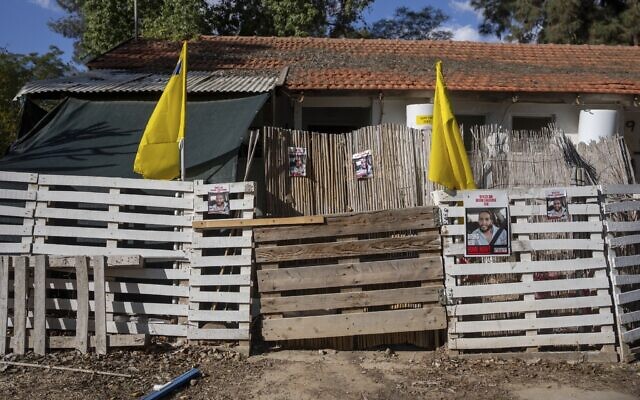
The home of Matan Zangauker, photographed on December 5, 2024, still stands empty. Zangauker is one of five hostages, out of a total of nine, from the kibbutz still being held in Gaza who are thought to be alive. (AP Photo/ Ohad Zwigenberg).
A dedicated professional directorate within KKL-JNF will administer the NIS 750 million. It will focus on a wide range of needs, among them repairing homes and public buildings, supporting economic revitalization and demographic growth, and investing in education, innovation, and community resilience.
KKL will also provide support to northern and southern municipalities that have hosted evacuees from the affected regions.
It will establish community centers (“KKL-JNF Houses”) in Gaza border area towns to foster leadership and excellence among young people.
KKL-JNF emphasized in a statement that the program’s ultimate goal was not only to restore what existed before, but to create new engines of growth to ensure the long-term prosperity of towns and cities, while maintaining the continuity of communities along Israel’s borders. It said the organization would work closely with government ministries, local authorities, and the communities themselves to ensure that funds were invested effectively to meet real needs on the ground.