
The United States has eased sanctions on Belarus, allowing the national carrier Belavia to service its Boeing aircraft and purchase spare parts, after President Alexander Lukashenko ordered the release of 52 prisoners, including prominent opposition figures and foreign nationals.
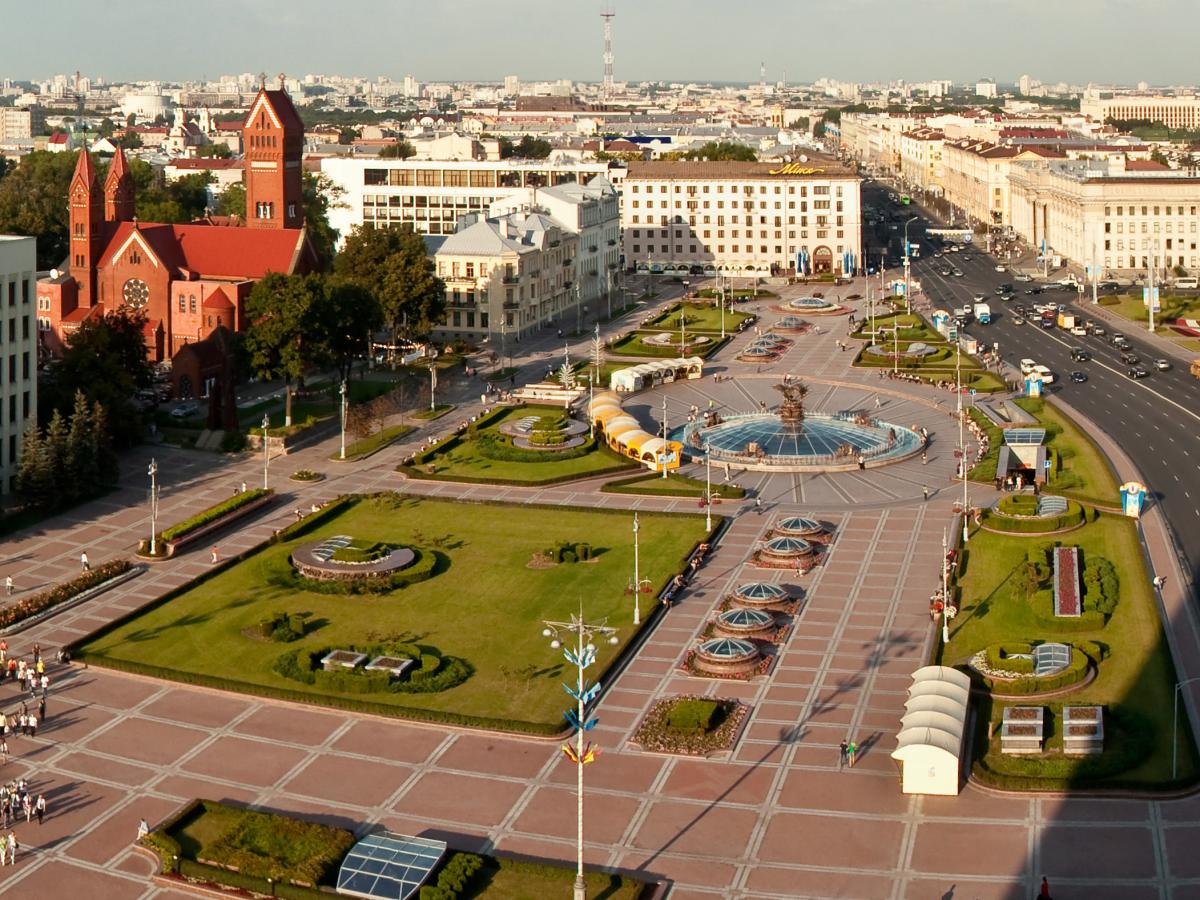
Photo: commons.wikimedia.org by Zedlik, https://creativecommons.org/licenses/by-sa/3.0/
Minsk, Belarus
Belavia Back in Business After Sanctions Relief
According to the US Embassy in Lithuania, the sanctions rollback enables Belavia to resume vital maintenance of its Boeing fleet. Washington’s decision followed Minsk’s release of 52 convicts, among them 14 foreign citizens from Lithuania, Latvia, Poland, Germany, France, and the United Kingdom. Notably, former presidential candidate Nikolai Statkevich and philosopher Vladimir Matskevich were also freed.
Western restrictions against Belarus intensified after the contested 2020 presidential election and subsequent protests. The European Union sanctioned Belavia in 2021, followed by the United States in 2023. Minsk’s attempts to challenge these measures proved unsuccessful.
Trump’s Envoy in Minsk and a Letter to Lukashenko
The Polish daily Rzeczpospolita reported that sanctions relief was part of Lukashenko’s conditions for prisoner amnesty. Ahead of the pardons, US presidential envoy John Cole arrived in Minsk to deliver a personal letter from Donald Trump. In it, Trump congratulated Lukashenko on his 71st birthday, wishing him health and prosperity.
Cole later announced Washington’s intention to reopen its embassy in Minsk, though no dates were specified. The US State Department suspended operations there after the start of Russia’s military campaign in Ukraine. This marked Cole’s second visit in 2025, following a June trip with US diplomat Kellogg, which was seen as an effort to accelerate peace talks on Ukraine. That earlier visit led to the release of 14 Belarusian prisoners, including opposition blogger Sergei Tikhanovsky, husband of ex-presidential candidate Svetlana Tikhanovskaya.
Strategic Reset and Pressure on Russia
Analysts argue that the US sees Belarus as a useful intermediary in influencing Russia, given Lukashenko’s close ties with President Vladimir Putin. According to researcher Pavel Koshkin of ISKRAN, Trump’s administration views this moment as an opportunity for “psychological pressure” on Moscow, mirroring Russia’s outreach to Cuba and Latin America.
Mark Episkopos of the Quincy Institute advanced a similar argument in his June article for The National Interest, suggesting that normalizing relations with Belarus would strengthen security in Eastern Europe while the US pivots toward Asia. He criticized the West’s post-2020 “autopilot” policy of maximum pressure, which, he argued, only drove Belarus further into import substitution and estrangement from the West.
Pragmatism and Trump’s Personal Style
Experts note that Washington and Minsk briefly aligned during Trump’s first term, when Secretary of State Mike Pompeo visited Belarus. Back then, Lukashenko sought ways to lessen dependence on Russia, while the West aimed to pull Belarus closer to Europe. But after 2020, the West’s preference shifted toward Belarus without Lukashenko. Today, US strategists appear to accept him as a pragmatic partner.
In Moscow, such US-Belarus contacts are unlikely to provoke open criticism. Analysts expect Russia to frame them as signs of overcoming “old prejudices,” while quietly monitoring Minsk’s commitment to integration with Russia. Sanctions relief, from Moscow’s perspective, is also beneficial if it eases economic pressure on an ally.
According to Koshkin, Trump’s outreach may also carry a personal dimension: “He enjoys showcasing his ability to deal with so-called ‘bad guys’—a way to assert himself and project toughness.” Researcher Nikolai Silaev agrees, noting that Trump’s foreign policy appears comfortable engaging with leaders the West brands as autocrats.