

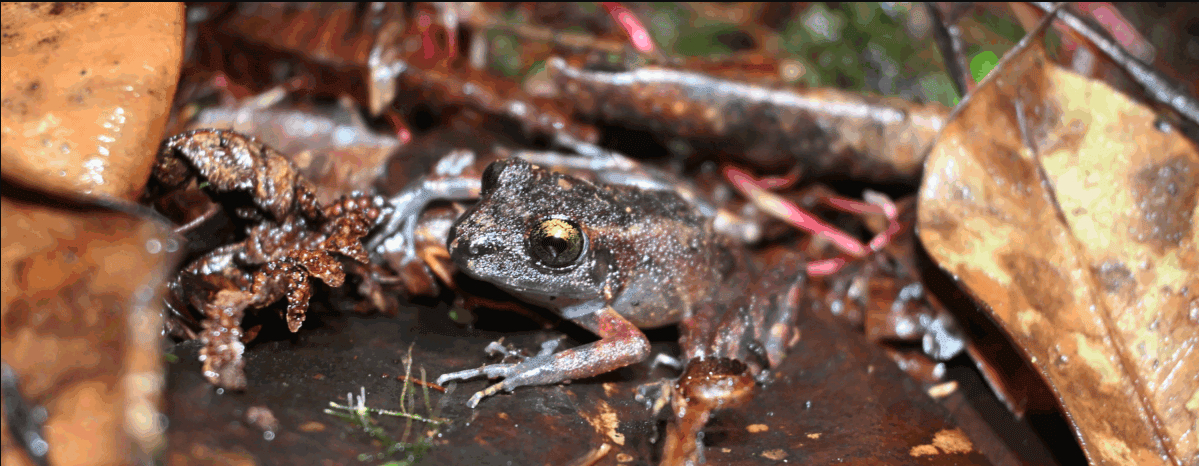
- Local communities and scientists have discovered a new-to-science frog species, Oreobates shunkusacha, in the cloud forests of the Bosques de Vaquero Biocorridor, in the San Martín region of Peru.
- Its name, Shunku Sacha, which in Kichwa-Lamista means “heart of the forest,” honors the local communities leading conservation work in the area.
- In a study describing O. shunkusacha, researchers write that the species is likely endangered.
- Over the past 40 years, the Lake Sauce sub-basin, where the frog lives, has lost nearly 60% of its forest cover, placing both the survival of the newly discovered species and the stability of this ecosystem at risk.
Deep within the cloud forests of the San Martín region of Peru lie two places so high, cold and remote that they remained virtually unexplored for decades. In 2022, and again in 2025, monitors from three Indigenous and local associations guided a team of scientists from Peru and France on a series of expeditions to unravel their mysteries. It was there, within the Bosques de Vaquero Biocorridor, that one of the most striking discoveries emerged: a small, previously unknown frog hidden among the fallen leaves.
They named it Shunku Sacha, which in Kichawa-Lamista means “heart of the forest.” The scientific name of the new species, Oreobates shunkusacha, honors the territory where it was discovered — a place that, along with the frog, is now threatened by the rapid destruction of the forest.
O. shunkusacha was formally described in a study recently published in the German journal Salamandra. Due to the threats facing the species and its small known range, the study’s authors say it should be considered endangered.
A collaborative effort
The research was carried out by local associations and scientists from Nature Conserv’Action and the Ararankha Association–Ecology and Conservation, who have been working in the area since 2022, with the aim of bringing science closer to local organizations that protect the forests.

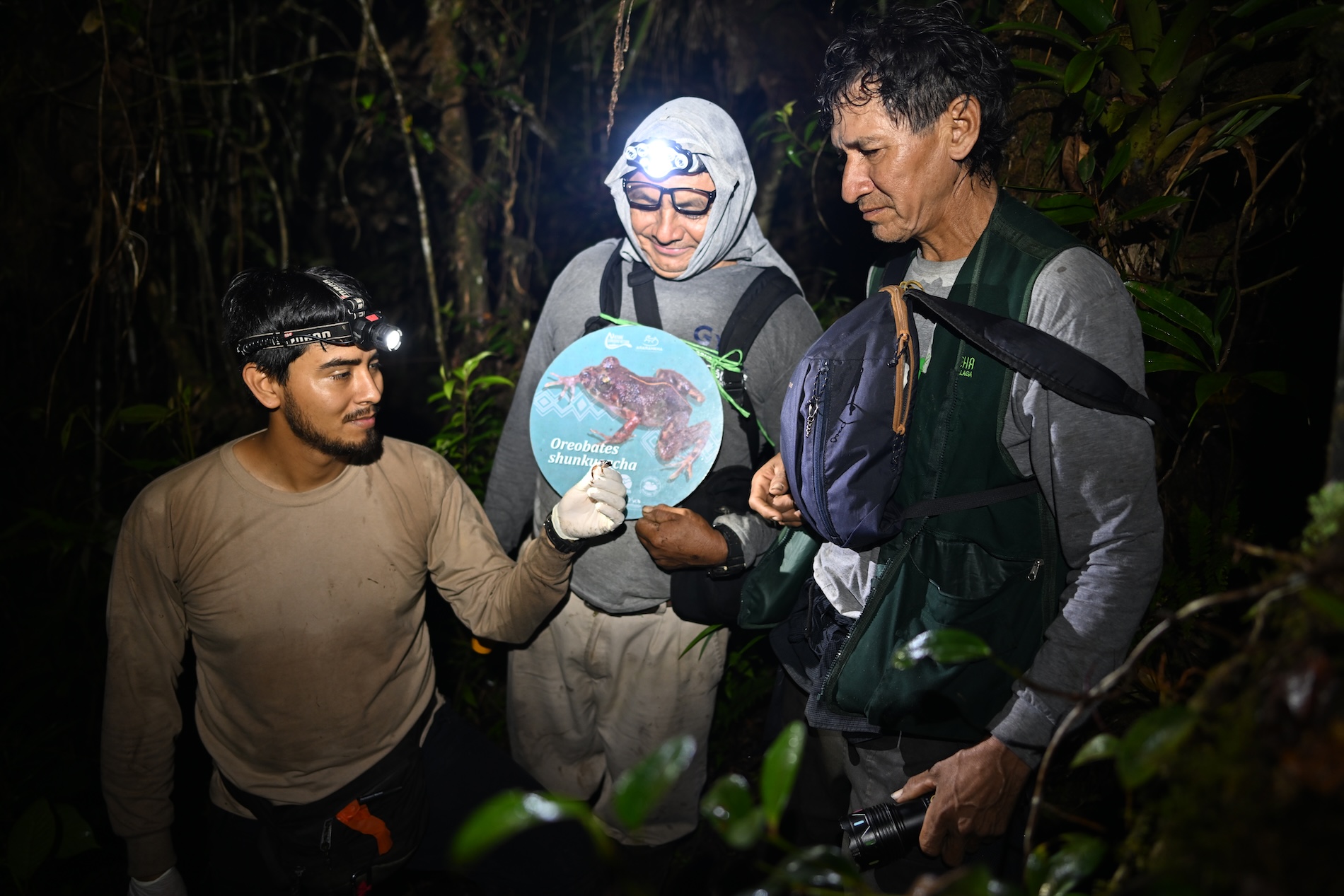
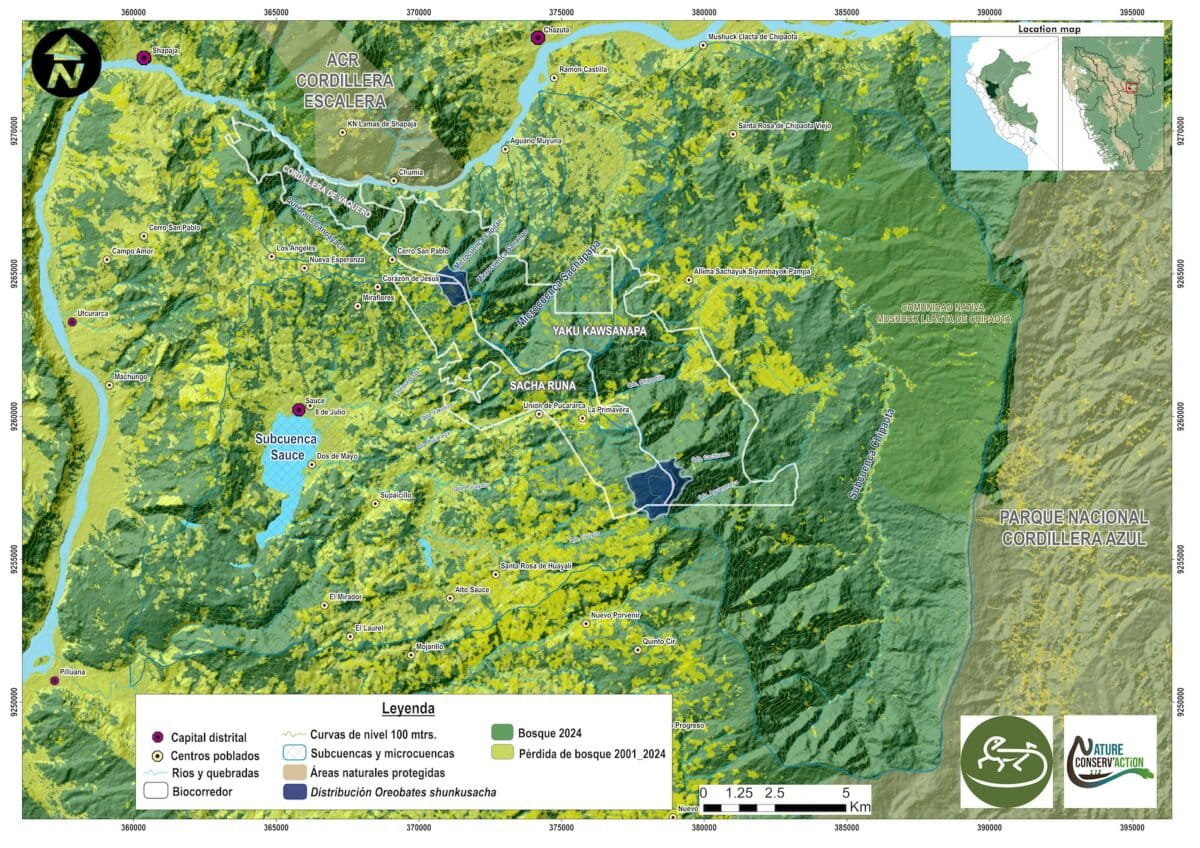
These forests, which cover roughly 8,000 hectares (about 20,000 acres), are distributed across three areas: Yaku Kawsanapa, Sacha Runa and Cordillera de Vaquero. These areas are protected by 30 volunteers who tackle deforestation through community-led projects and initiatives.
“The greatest challenge is ensuring the protection of the biocorridor,” says Kenneth Mori Ríos, president of the Sacha Runa Ecological Association. “It’s a dream we have: to see this entire area free from environmental crimes so that the species being discovered can endure over time. We hope that, with the support of our authorities and partners, we can make this dream a reality.”
A unique little frog
O. shunkusacha measures just 2-3 centimeters (about 1 inch), with dark brown coloration and striking golden irises. It inhabits cloud forests more than 1,350 meters (4,430 feet) above sea level.
“Because these are isolated hills, they act like islands with unique ecosystems in which such species live,” said Ernesto Castillo, a herpetologist at Ararankha and lead author of the Salamandra study.
At night, O. shunkusacha frogs emerge to roam the forest. Observers say they move through the leaf litter, moss and ferns that cover the forest floor, with some making their way toward the high-mountain lake known as Cocha Encantada.
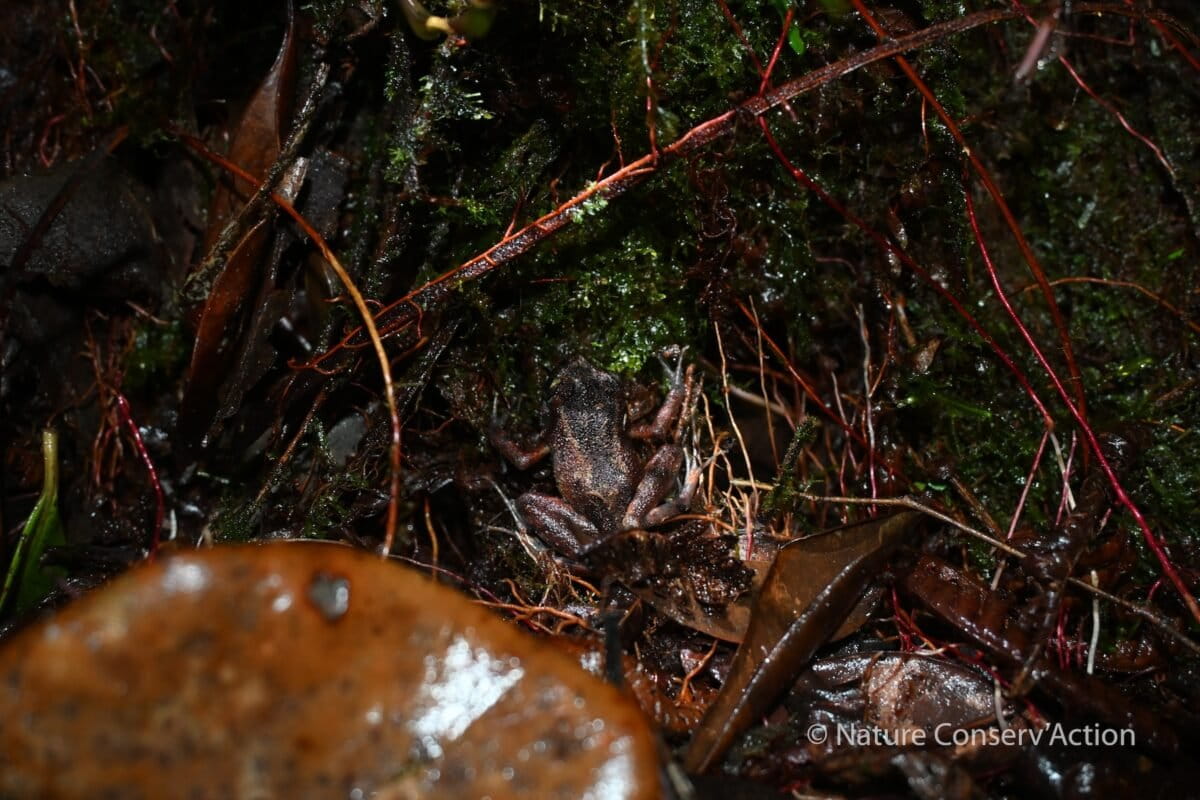
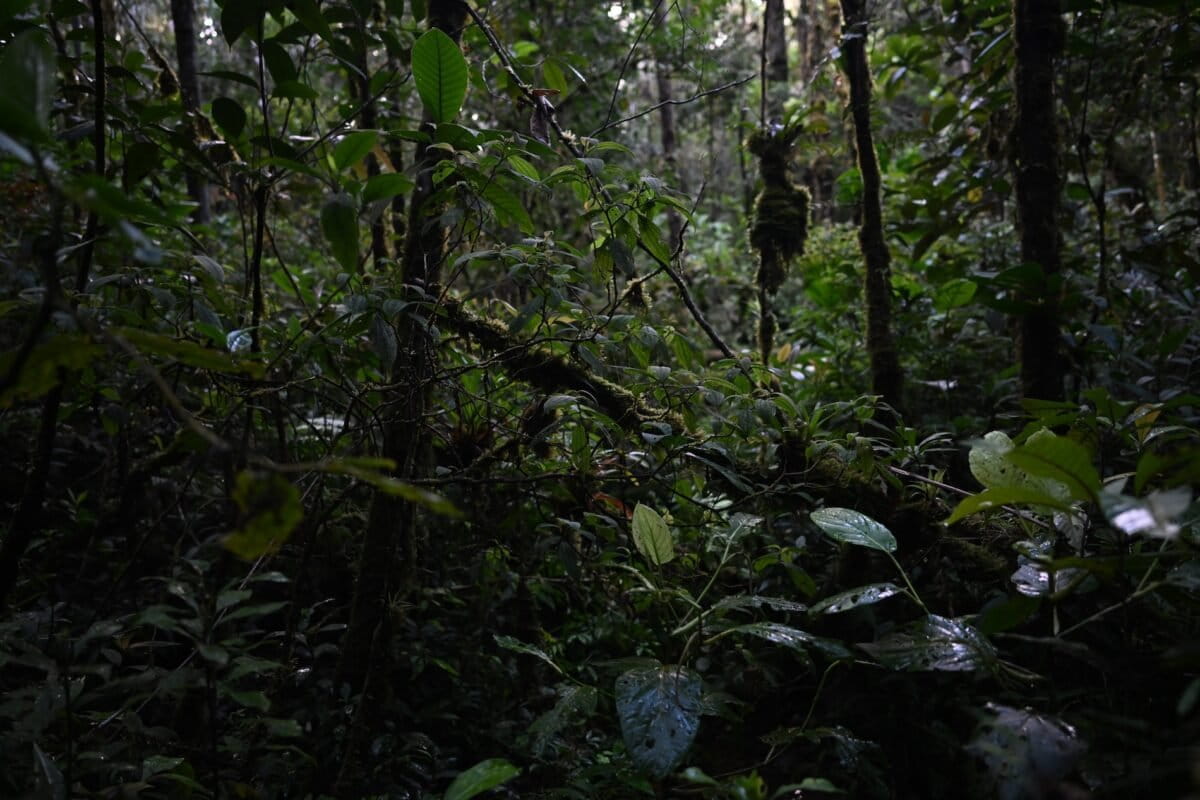

These frogs are known only from two locations in the department of San Martín: the Sacha Runa Conservation Concession, in the district of Sauce, and the Yaku Kawsanapa Concession, in the district of Chazuta. Both sites lie in the northern section of the buffer zone of Cordillera Azul National Park. The frogs were found in old-growth basimontane yungas forest, a type of humid subtropical forest found in foothills and around mountains, and surrounded by patches of secondary forest, deforested areas and agricultural plots.
“It was an exchange between scientific methodologies and local knowledge, so it was the communities who really discovered the species by pointing us to places where they had seen unique ecosystems,” said Mathias Dezetter, co-founder and scientific director of Nature Conserv’Action, and a co-author of the study. “They also took part in the scientific methods and the fieldwork, and were included through workshops leading up to the publication of the paper.”
The journey that uncovered the unexpected amphibian began with a participatory survey in October 2022. Community conservation associations made up of local residents familiar with the territory worked with scientists to define sampling areas to document the region’s biodiversity.
“When we were mapping out the places where we wanted to search for species, we asked [the local residents]: ‘Where have you seen different ecosystems, unusual vegetation, rare plants or remote areas?’” Castillo said. “These insights gave us clues as researchers — they made us think, ‘This place seems very interesting.’ And then the communities guided us there.”
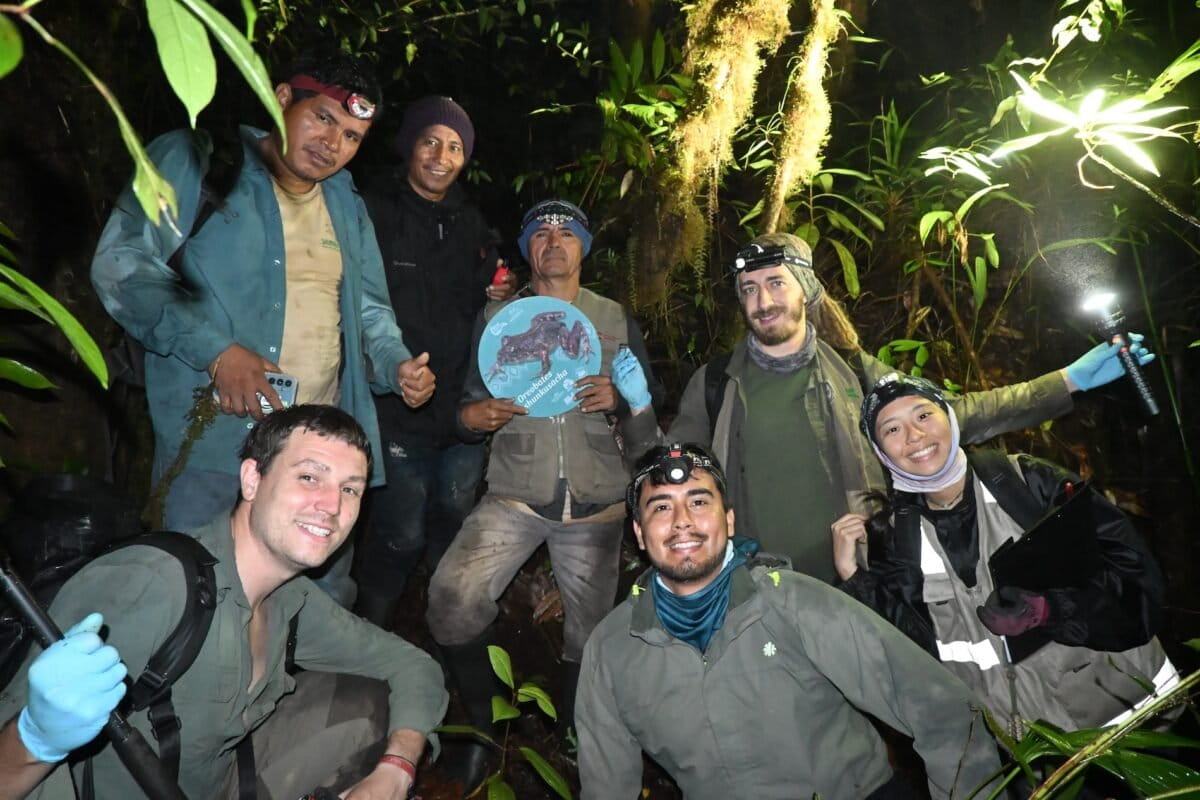

The first expedition ended short of the summit, as the terrain was simply too difficult. But on the second attempt, the explorers reached the high-elevation forests, where they found the frog.
“At first, we didn’t know it was something different; we had our suspicions, but nothing was confirmed,” Castillo said. It wasn’t until 2024, after a more detailed comparison of the frog’s morphology along with genetic analysis, that the team realized it was a unique species, distinct from previously described Oreobates species.
The study found O. shunkusacha is closely related to another frog, O. colanensis, but is distinct from that species and others in the genus.
Tackling deforestation
Over the past 40 years, the area comprising and surrounding the habitat of O. shunkusacha has lost 60% of its forest cover, according to Nature Conserv’Action. The main causes of this loss are small-scale coffee and cacao farming, livestock grazing, and illegal logging.
According to community monitors and scientists, the impacts of forest loss are already evident. They say sedimentation in Lake Sauce caused by erosion that would otherwise be mitigated by the soil-binding roots of trees, and the removal of forests, are disrupting the water cycle in the lake’s sub-basin.
“We organized ourselves for the simple reason that we saw people deforesting our forests and our biodiversity was being destroyed,” said Julián García, founding member of the Yaku Kawsanapa Bio Agro-Forestry Association, who, along with Samuel Álvarez, leads community patrols in the area. “We organized patrols to be able to access the depths of our land, and this has allowed us to speak directly with the people who are deforesting and burning our forests,” García said.

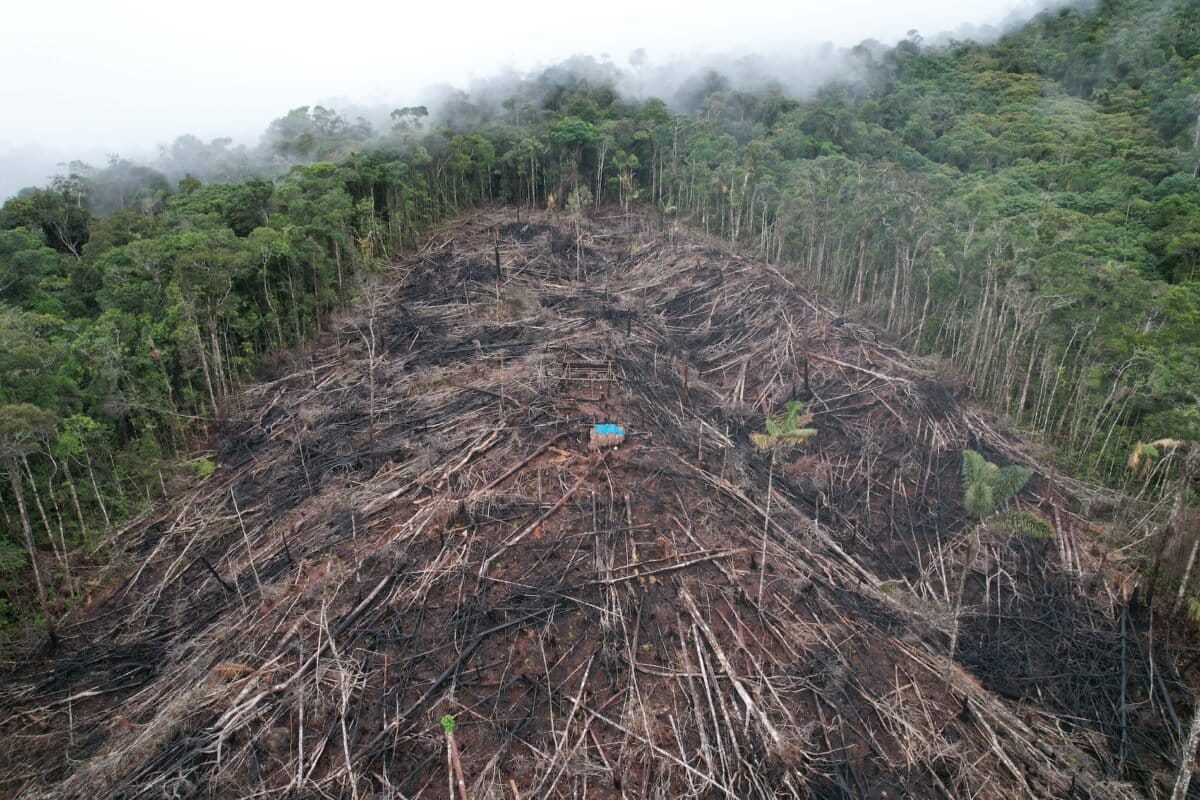
In 2015, community members committed, through a renewable 40-year agreement, to protect the area by conducting patrols, monitoring species, providing environmental education, carrying out research and running awareness-building campaigns. All of this work, members said, is done voluntarily, without financial compensation or external support to confront the threats.
In 2024, in effort to conserve the Bosques de Vaquero Biocorridor, the Co-exist initiative was launched by the IUCN, the global wildlife conservation authority, with support from French conservation foundation Le Poids du Vivant. The initiative aims to strengthen the central role of local communities in protecting their forests, training residents to be biodiversity monitoring brigades.
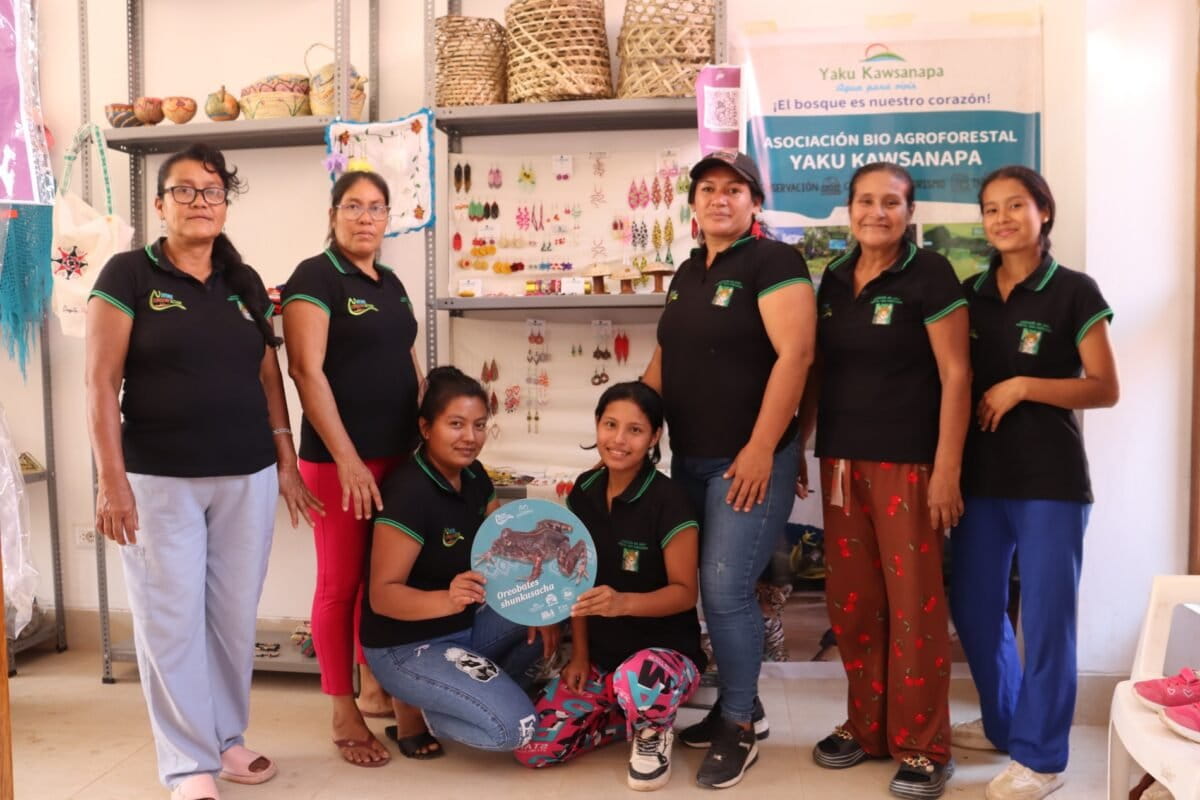
At the same time, families in the biocorridor sustain their livelihoods through ecotourism and related activities, such as women-led handicraft work.
“After all the effort we’ve put in, we can say that more women have joined this research,” said artisan and community monitor Carolina Zumba Tananta, who is a member of Yaku Kawsanapa. “We can now say that, as women, we’re able to go out, face challenges and achieve results. We put love into everything we do, and as artisans, we incorporate into each piece all the conservation work we’ve been doing.”


The communities that protect the Bosques de Vaquero biocorridor also wrote The Adventures of Sumi, a story in which O. shunkusacha is one of the main characters. The story reflects the findings of the participatory research in the area and shares the unique biodiversity of these forests through the eyes of a frog protagonist searching for a new home after its habitat was destroyed. The story aims to educate and inspire local children, the future guardians of these forests.
“If we do nothing, future generations will have nothing for themselves,” Zumba Tananta said. “That’s why we’re calling on everyone to unite and protect our forests because our water comes from them, and water is life for all of us.”
This story was first published here in Spanish on Nov. 18, 2025.
Banner image: Oreobates shunkusacha lives exclusively in the cloud forests of the San Martín region in Peru. Image courtesy of Nature Conserv’Action Perú.
Citation:
Castillo-Urbina, E., Vences, M., Dezetter, F., Glaw, F., Burgos, C., Aliaga, L., … Köhler, J. (2025). New insights into the diversity of Oreobates frogs (Anura: Craugastoridae): Description of a new species from the Peruvian Yungas and comments on O. quixensis and O. saxatilis. Salamandra, 61(4), 423-441. Retrieved from https://www.salamandra-journal.com/index.php/contents/2025-vol-61/2204-castillo-urbina,-e-,-m-vences,-m-dezetter,-f-glaw,-c-burgos,-l-aliaga,-g-torres-ccasani,-s-f-hope,-a-mendoza-j-köhler
Feedback:Use this form to send a message to the editor of this post. If you want to post a public comment, you can do that at the bottom of the page.