
It is not wrong to say that for decades, global decision-making was dominated by a small group of Western nations, as a large part of Asia, Africa, and Latin America starred from the margins. However, today, the balance is visibly shifting. The Global South, a broad grouping of developing and emerging economies, including India, is no longer just a subject of diplomatic policy but an active player in global outcomes and decisions.
The sectors where such countries from the Global South are exerting their emerging dominance and influence range from trade to geopolitical alignments.
At the centre of this transformation stands India, leveraging its economic growth and careful diplomatic positioning, and with this, New Delhi is in many ways emerging as a leading voice of the Global South. According to K.P. Fabian, former Indian Foreign Service (IFS) officer and defence expert, this moment presents both opportunity and responsibility for the country.
Add Zee News as a Preferred Source

Also Read- India-EU evolving ties: Why New Delhi could be the ‘perfect’ partner for Europe | EXPLAINED
Why the Global South suddenly matters
The rising importance of the Global South reflects bigger changes in international politics. Economic growth in Asian nations, combined with dissatisfaction over Western-dominated institutions, has pushed developing nations to seek alternative platforms.
“The rise of the Global South has indeed enfeebled the North,” Fabian noted, adding that the shift is not driven solely by Southern assertion.
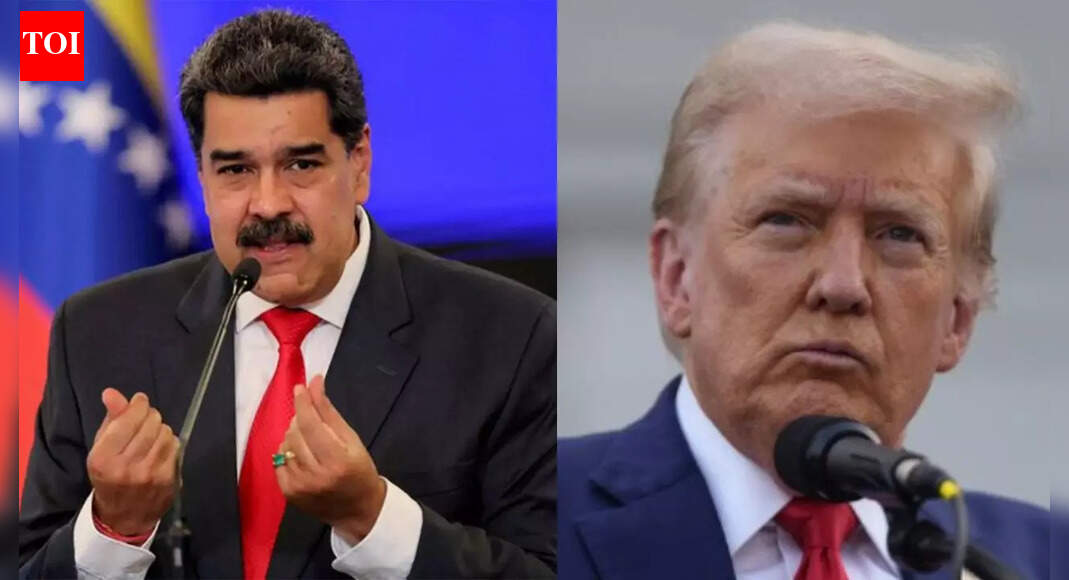
“Even more importantly, the North itself is getting fragmented, thanks to US President Donald Trump,” he said.
This fragmentation is a result of the policies of President Trump, who came back to the US political centre stage. His tariffs and trade policies have created space for non-Western coalitions to influence global discourse. Thus, pushing even the largest economies into the arms of the Global South.
India’s role in global forums
India has actively positioned itself as a bridge between the developed and developing worlds, particularly through forums such as the G20, BRICS (Brazil, Russia, India, China, and South Africa), and the Quad.
“India can and does take a lead in matters that matter to the Global South,” Fabian said, highlighting New Delhi’s role in amplifying concerns related to development finance, climate justice, and equitable growth.
India’s G20 presidency was a key example of this approach, with a strong focus on inclusivity and sustainable development.
“India should seek better relations with neighbours to raise its geopolitical profile and eventually get a permanent seat at the United Nations Security Council (UNSC),” he emphasised.
“India would need to take a more balanced position on the genocide Israel committed in Palestine,” he argued, suggesting that credibility with the Global South would also depend on principled diplomacy.
Challenging the western-led order
The growing confidence of the Global South is increasingly challenging the traditional Western-led global order. Countries across the Global South are questioning unequal rights, selective application of international law, and the dominance of Western currencies in global trade.
Shaping global governance in the next decade
Looking ahead, Fabian sees BRICS as a critical platform through which India can shape global norms without triggering direct confrontation with the West.
“India holding the BRICS chair now can subtly push the use of national currencies for trade without irritating Trump,” he said.
Strategic Caution in a volatile world
Fabian also urged caution in navigating Trump-era diplomacy. On proposals such as the ‘Board of Peace’ chaired by US President Trump, he advises restraint.
“India should politely decline to join Trump’s Board of Peace as he might bring in a solution of the Kashmir question in order to show favor to Pakistan where he has business interests,” Fabian believes.
Prominent visits to India recently
- Germany – Chancellor Friedrich Merz – 12-13 January, 2026
- UAE – President Sheikh Mohamed bin Zayed Al Nahyan – 19 January, 2026
- European Union, President of the European Council António Costa and President of the European Commission Ursula von der Leyen – 25-27 January, 2026
- (Upcoming) France – President Emmanuel Macron – February, 2026
- (Upcoming) Canada – Prime Minister Mark Carney – March 2026
Prominent visits to China recently
- The UK – Keir Starmer – 28-31 January, 2026
- Finland – Petteri Orpo – 25-28 January, 2026
- Canada – PM Mark Carney – 14-17 January, 2026
- France – Emmanuel Macron – 3-5 December, 2025
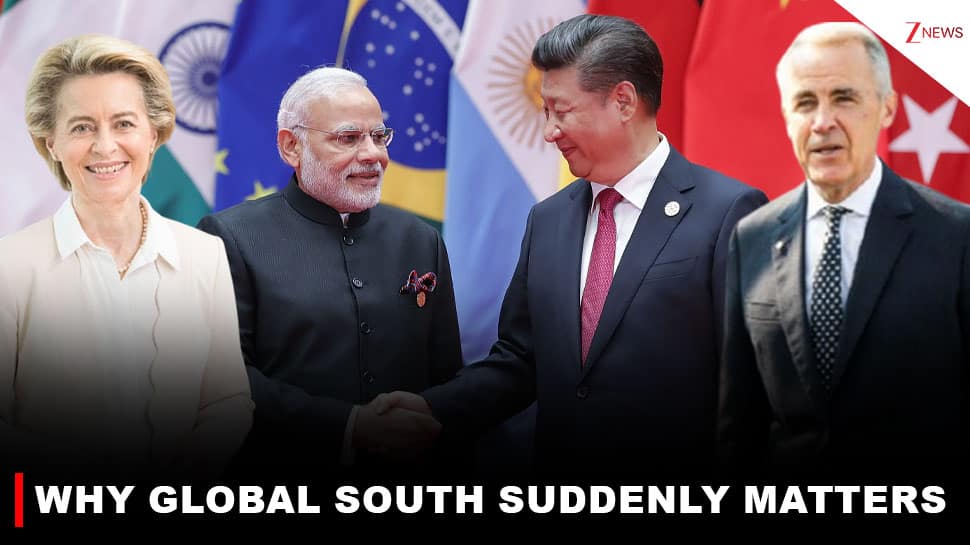
Such high-profile visits from the leaders of the West are a sign that there is a visible shift in power and the world is looking towards nations like India in search of stability, growth, and better supply chains. This could also paint a clear picture that the world is moving away from the US market as a result of the aggressive moves put in place by the Trump administration.
The renewed prominence of the Global South marks one of the most significant geopolitical shifts of the 21st century. As Western dominance is emerging, the economies are asserting themselves, and countries once sidelined are now shaping global debates.
With its expanding influence across global forums, India has the opportunity to act as a credible leader of the Global South.